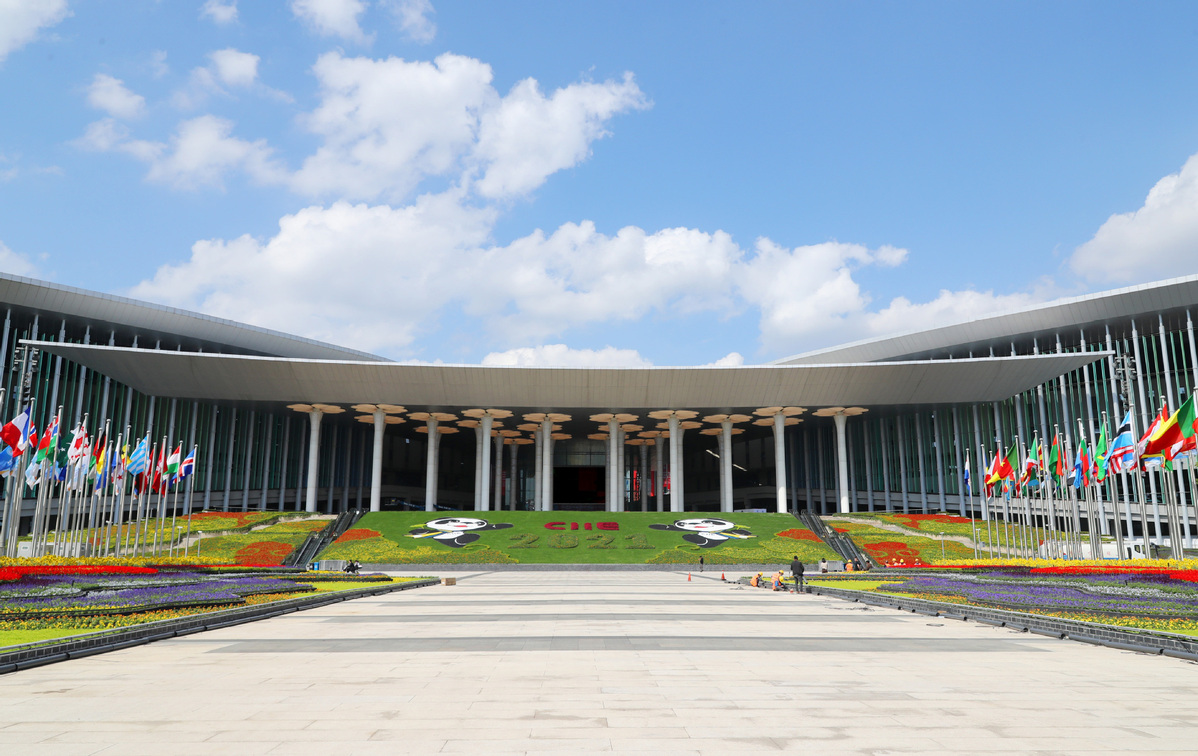
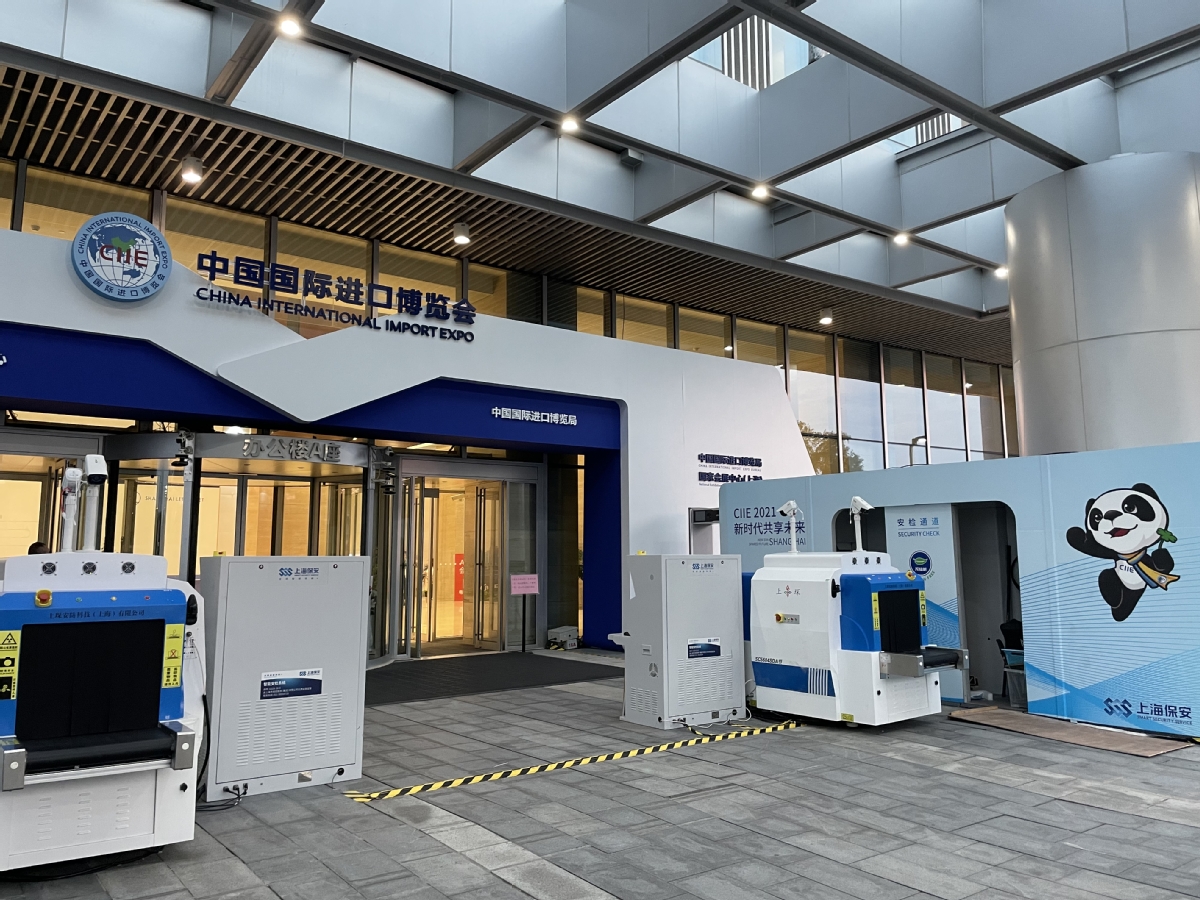
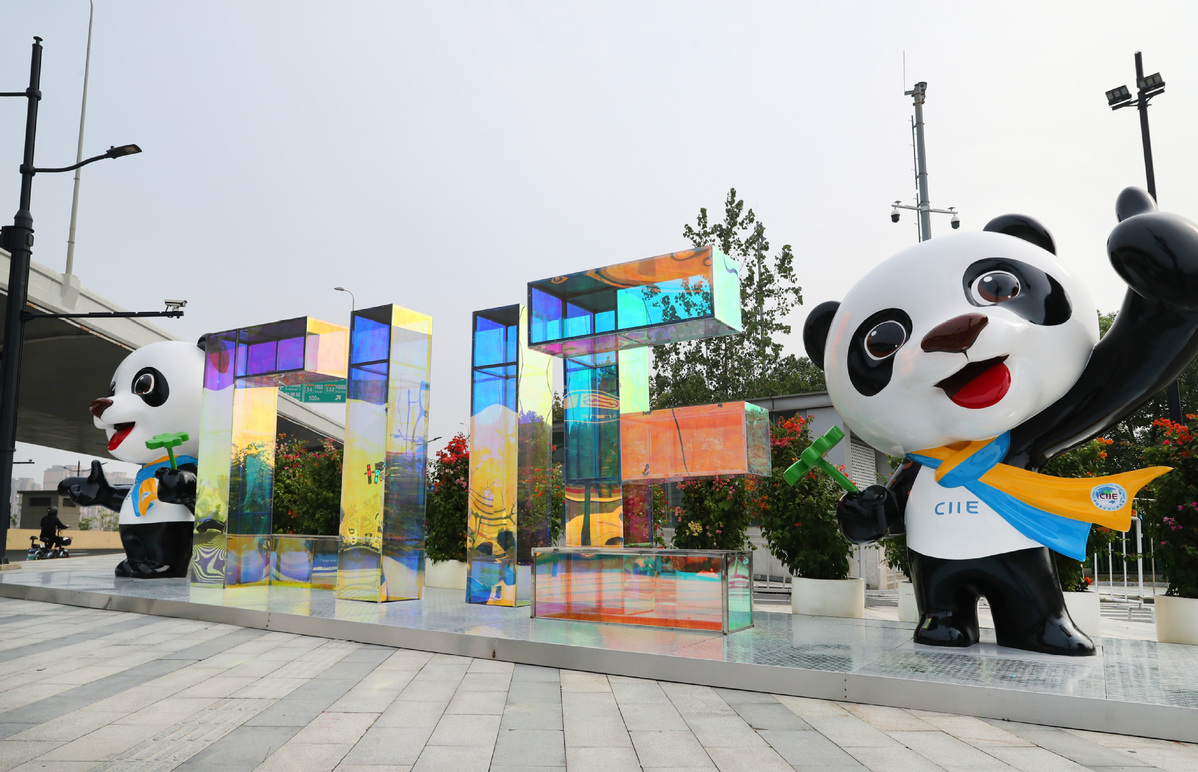
The China International Import Expo (CIIE)is the world's first dedicated import exhibition and its three previouseditions have seen fruitful outcomes. The 4th CIIE is slated to be held offlinein Shanghai from Nov 5 to 10, and preparations are underway and progressingwell. Meanwhile, a total of 21 countries andinternational organizations are also taking part in the online countryexhibition which is now in trail operation for the fourth China InternationalImport Expo, Jiefang Daily reported on October 19. Facilitating technologies such asthree-dimension modeling and virtual engine, the online country exhibitiondisplays an exhibitor's development achievements, leading industries, cultureand tourism and representative enterprises via pictures, videos and 3D modelsin a digital exhibition hall. The virtual exhibition will be formallylaunched on Nov 5 when the fourth CIIE opens. During the coming CIIE, virtualreality devices for browsing the online country exhibition will be alsoavailable at the north hall of the National Convention and Exhibition Center inShanghai. The third edition of China InternationalImport Expo, which was held amid the global pandemic in November, was thelargest expo held offline in the world last year, said Shanghai mayor GongZheng. "We have confidence that we cancontinue to make the CIIE a safe and successful expo in the years tocome," Gong said at a news conference after the conclusion of the annualsession of the municipal people's congress. "The expo has been highly recognizedby businesspeople around the world, as more companies have brought their newproducts and technologies to showcase at the expo," he said, adding thatmany exhibitors have already signed up for this year's expo, and some have evenreserved their spots for the next three editions. Last year's third edition of the expospanned 360,000 square meters, an increase of 30,000 square meters over itssecond edition. Intended deals inked at the expo amounted to $72.6 billion, up2.1 percent year-on-year. Gong said it is important to furtherenhance the expo's role as a platform for the country's dual circulationstrategy and expand its spillover effect. "We will work to build the expo into aplatform for international procurement, investment promotion, cultural exchangeand open cooperation," Gong said. "Companies from across the worldare all welcomed to share the country's growth at the fourth edition of CIIEthis year." Xiforges CIIE into top trade platform powering world economy Over the past three years, Chinese PresidentXi Jinping has through his speeches at the China International Import Expopresented China's promises of opening-up and win-win cooperation. Xi's message to the world has beenconsistent and far-reaching, demonstrating China's confidence and strong senseof responsibility to join the rest of the international community to tacklecommon challenges and build a better world for all. The hosting of the fourth CIIE demonstratesChina's sincere desire to share its market opportunities with the world and contributeto global economic recovery, Xi said. The expo "demonstrates China'sconsistent position of supporting the multilateral trading system and promotingfree trade," said Xi at the opening ceremony of the first CIIE, addingthat the annual expo "will feature good performance, fruitful results and continuedsuccess in the years to come." The CIIE is an epitome of China integratinginto the grand circulation of the world economy and promoting common prosperitywith its own development. Following the completion of building amoderately prosperous society in all respects, China will embark on a newjourney towards fully building a modern socialist country and realizing thesecond centenary goal. Facing challenges and missions ahead, Chinawill strive to foster a new development pattern that features the domesticmarket as the mainstay with domestic and international markets reinforcing eachother. The new development pattern China envisions"is not a development loop behind closed doors, but more open domestic andinternational circulations. We will do so not only to meet China's owndevelopment needs but also for the greater benefit of people in allcountries," said Xi when addressing the third CIIE. "China has a population of 1.4 billionand a middle-income group that exceeds 400 million," Xi noted. "Thevastly huge China market is the most promising in the world. Total import intoChina is estimated to top $22 trillion in the coming decade." Xi once compared the Chinese economy to anocean, saying that big winds and storms may upset a pond, but never an ocean,reflecting China's confidence and determination to overcome the difficultiestogether with other countries. The successful hosting of the expo is onlyone piece of evidence of China's commitment to practicing multilateralism."To put into practice the principle of multilateralism, we must act, notjust talk," Xi said when addressing a high-level meeting to commemoratethe 75th anniversary of the United Nations. China has for long been making relentlessefforts to expand opening-up. Over the past four years, the CIIEs hosted byChina have grown into a top trading platform to promote global free trade. Apart from the CIIE, China has also beenhosting a series of major trade events including the 63-year-old Canton Fairand the China International Fair for Trade in Services. In a nutshell, Chinahas always been a loyal supporter and practitioner of multilateralism. Just as Xi said when addressing this year'sCIIE opening ceremony, "big countries need to lead by example, majoreconomies need to act on sound principles, and developing countries need toplay an active part in promoting opening up and sharing responsibilities. It isby working together that we will advance common development of our world." Tofasten the agricultural modernization The 4th CIIE has also attracted globalplayers bringing their latest products and offering solutions related to agricultureand rural modernization. Products that are scheduled to be ondisplay include a portable farm from Israel, German biodegradable equipment andSwiss carbon emission reduction service system. Analysts believe that the exhibits mayenlighten government departments, enterprises, institutions and consumers andhelp broaden their understanding of China's rural vitalization campaign. The CIIE is the first dedicated importexhibition in the world and has seen fruitful outcomes in the past three expos. Liu Xiaomin, an entrepreneur from SouthwestChina's Chongqing municipality, is a frequenter of the expo. Having raked inbusiness success by importing wine and other products from Russia andUzbekistan, she believes that the CIIE has achieved "win-win cooperationbetween China and foreign countries." In February, China declared a"complete victory" in eradicating absolute poverty. Now with the goalof building a moderately prosperous society in all respects realized, China isramping up efforts to propel rural vitalization. China will prioritize the development ofagriculture and rural areas, and fully advance the rural vitalization strategyduring the 2021-2025 period. By 2035, "decisive" progress shall bemade, with basic modernization of agriculture and rural areas, and by 2050,rural areas shall see all-around vitalization. Agribusiness giant Cargill has participatedin the past three CIIEs and plans to display its top agricultural products andrelated processing technologies at the 4th CIIE. In June 2021, Cargill inked a cooperation agreementwith the United Nations World Food Programme, aiming to help corn growers innortheast China better cope with risks and promote sustainable farming. Liu Jun, president of Cargill China, notedthat this year marks the 50th anniversary of Cargill's entry into the Chinesemarket. "The project demonstrates Cargill's continued commitment toincreasing farmers' income and promoting sustainable agricultural developmentin China," he said. In 2017, the rural vitalization strategywas elaborated in the report of the 19th National Congress of the CommunistParty of China. Exhibitors in the fields of agricultural products, machineryand management grabbed much attention at the first CIIE in November 2018. Over the past three years, a number ofprojects signed at the CIIE have facilitated rural vitalization across thecountry. Cargill has been adjusting its exhibits tobetter cater to the demand of Chinese consumers and the strategy of ruralvitalization. For example, the company has been shifting from displaying theprocessing technology of animal-based protein products to commodities that areplant-based, with reduced sugar and low calorie. Cargill also reached an agreement withChina Agricultural Science and Education Foundation to provide training and scholarshipto farmers and students at agricultural colleges. Not only agricultural companies, foreignauto and high-tech firms participating in the expo have also put their eyes onpublic welfare in rural areas. General Motors has forged cooperation with ChinaDevelopment Research Foundation to aid preschool education in China's ruralcommunities. So far, 618 children aged between three and six in Qinghai, Hunanand other provinces have benefited from the program. Expert’sAnalysis Luigi Gambardella, President of the ChinaEUthink tank, spoke highly of the role that the CIIE plays in China's newdevelopment pattern and expects the expo to provide solutions for the relaunchof the global economy in the wake of the pandemic. He detailed the profoundimpact of CIIE by replying the following five questions. 1. The third China International ImportExpo has concluded successfully with tentative deals totaling $72.6 billion, up2.1 percent from the previous expo. What signal has this sent to the world? First of all, this figure shows that afterjust three years since its first edition, the CIIE has become an established,globally successful event. Considering the ongoing pandemic crisis andthe hard time most countries are going through, the 2020 edition of CIIE gave astrong signal to the world that China is committed to contributing to worldeconomic recovery by offering itself as a market for the world, and as aforeign investor-friendly destination. China is the only G20 economy to haverealized positive GDP growth in 2020. The growth of the Chinese economy is areal one: the PMI index has been above the 50-point threshold of growth fornine consecutive months, the production and services data both demonstrate asolid recovery, fixed investments and FDIs are both in the growth zone at +2.6percent and 6.3 percent respectively. As a result of this, trade companies acrossthe world are increasingly viewing the Chinese market as a priority destinationfor business and investments. CIIE provides a unique platform forbusinesses worldwide to tap into the huge potential of China's market andgenerate new opportunities in difficult times, while boosting confidence intrade and investment in the post-COVID era. 2. Since the reform and opening up policyin 1978, China has maintained a big trade surplus with foreign countries, butthe central government announced a "dual circulation" policy lastyear that seeks to address this. What role does the CIIE play in China's newdevelopment pattern? The CIIE provides an illustration ofChina's dual circulation policy, based on making domestic consumption the keydriver of economic growth, while at the same time promoting closer trade andinvestment relations with foreign markets. During the third CIIE, importantannouncements were made to further liberalize China's market to foreignbusinesses. These include the reduction of the negative list for foreigninvestors from 40 to 33, the increase of pilot free trade zones and free tradeports from 18 to 21, the encouragement of cross-border e-commerce and newmodels of foreign trade, and the increased protection of intellectual propertyrights, to name a few. These measures are very positive ininjecting confidence in foreign businesses operating in the country as theycreate a better business environment for foreign investors. In 2020, Chinaclimbed 15 positions to 31st place in the World Bank's ease of doing businessranking. 3. What long-term effect does this six-dayexpo bring to its participants and China's industry development? CIIE represents an important gateway forforeign businesses to promote new products to the Chinese market and to findprofessional buyers or new distribution channels for their products. To make the most out of participating inthe CIIE, foreign companies are encouraged to participate in pre-arranged B2Bmeetings, which are organized extensively throughout the duration of thesix-day fair. 4. China recently signed the RegionalComprehensive Economic Partnership with Asian countries and concluded thebilateral investment treaty with European Union. What would these trade pactsbring to the coming CIIEs? Both the Regional Comprehensive EconomicPartnership (RCEP) and the EU-China Comprehensive Agreement on Investment (CAI)were mentioned as ambitious goals to be achieved in regional and bilateralcooperation during the third CIIE. These high-level ambitions translated intoconcrete action, with both deals being signed before the end of 2020. Both agreements are of historicalimportance and can be expected to speed up economic recovery post-COVID bycreating a more favorable environment for international businesses andfacilitating foreign trade and investments. As such, they can be expected tofurther boost confidence in trading with China. The RCEP, which includes China, Japan,South Korea, Australia, New Zealand and the 10 members of the Association ofSouth East Asian Nations (ASEAN), represents the world's largest free tradeagreement. It covers a third of the global population and 30 percent of theworld's GDP. The EU-China CAI is the result of sevenyears of negotiations between the EU and China, who has been among the largesttrading partners of Europe. To reach the historical political agreement on CAIby the end of 2020 – which marked the 45th anniversary of EU-China diplomaticrelations – China made important commitments to the EU, such as reducing marketaccess barriers in a number of key sectors for the European industry, includingelectric cars, cloud computing, financial and health services, whileintroducing obligations for SOEs and rules on the transparency of subsidies.Overall, the CAI promises to make the investment relationship between the EUand China more balanced and more reciprocal. Both agreements will take months, mostlikely years, to enter into force as their implementation into law requiresratification by governments and, in the case of CAI, the European Parliament andthe Council. Once ratified, the EU-China CAI will contribute to makinginvestments by European companies in China easier. However, the politicalagreement achieved on December 30 last year is only a first step, since someimportant aspects – like the protection of foreign investment and theadjudication of disputes – are still being negotiated. The full effect of thesetrade pacts will be felt on the coming CIIEs only when this process has beencompleted. 5. What suggestions do you have for thefourth edition of the CIIE? We are confident that the CIIE will go onfor many years to come, and each year will attract more foreign importers andlocal visitors. We believe that turning the CIIE into ahybrid online and offline expo would allow even more participants to take partin the exhibition. The year 2020 has seen the proliferation of virtual fairsand digital B2B meetings. We expect this trend to consolidate in 2021 and inthe years to come as it has shown the great potential of digital tools in shorteningdistances and facilitating international business match-makings. As a leadinginternational expo, CIIE could lead in this evolution and become a point ofreference for future exhibitions around the world. The CIIE will play a significant role thisyear as it is a year of economic recovery from the COVID-19 crisis. As such, wewould suggest the CIIE to provide solutions for the relaunch of the globaleconomy in the wake of the pandemic. The program for this year's expo could, forinstance, introduce targeted supported activities so as to attract the mostinnovative foreign companies that have something to offer in the growingChinese domestic market. One can assume that, for example, fintechand control and processing of digital yuan transactions would be goodcandidates for the center-stage. New payment methods and revolutionizing pointsof sale could be another promising area as they provide new opportunities forEU companies and exporters. |