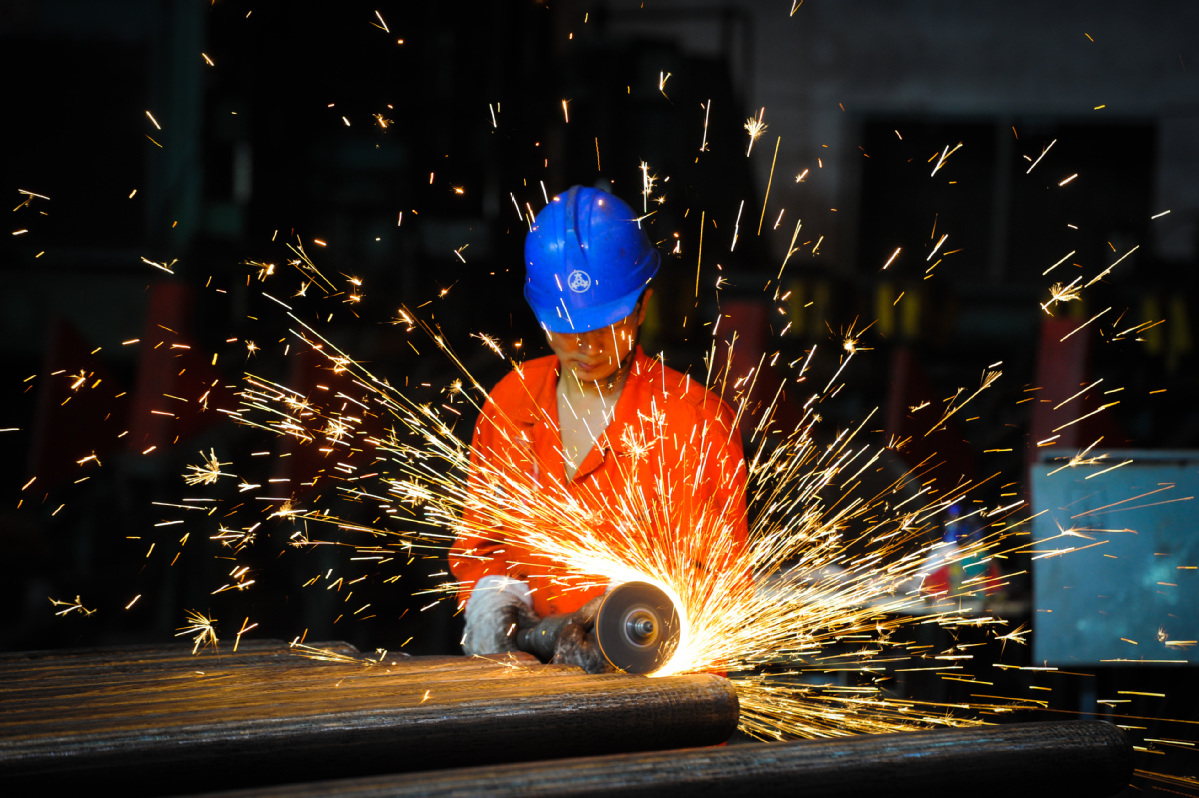
China's steel industry should adhere to thedual-circulation development pattern and accelerate the establishment of a stableand efficient supply system for raw materials, industry experts said. Stable,green and sustainable raw material supply is important for the Chinese steelindustry to improve competitiveness, but external uncertainties such as theCOVID-19 pandemic and rising protectionism have combined to exert strongpressure on the already vulnerable raw materials supply chain, they said. "It is critical for the Chinese steelindustry to efficiently use both domestic and foreign resources, forming adual-circulation development pattern, to ensure high-quality raw materialsupplies," said Li Xinchuang, Party chief of the China MetallurgicalIndustry Planning and Research Institute. China has limited production capacity tosupply raw materials for steel production, and more than 80 percent of iron,manganese and nickel ores are imports, while almost all chrome ores areimported, with import sources highly concentrated in a few countries, accordingto Li, who is also deputy head of the China Iron and Steel Association. Overseas mining assets of Chinese companiesproduce and export to China a limited amount of mineral ores used in steelproduction. But, prices fluctuate significantly at the same time as nosubstantial progress has been made in improving the pricing mechanisms of theraw materials. Moreover, since scrap metal imports arebanned, imports of the important alternative to iron ores have also slumpedheavily since 2018. The raw material trading network also needs improvement, Lisaid, referring to the weakness in transportation channels and lack offinancial products. Xu Xiangchun, information director and analyst withMysteel, an iron and steel consultancy, said iron ore is the most important rawmaterial for steel production. But China has very limited proven reservesof iron ores. A long time span, a vast amount of investments and a predictableand stable business environment are needed to successfully tap overseas ironore resources. The fluctuations in iron ore import prices at high levels oftensqueeze the profitability of domestic steel mills, he said. According to the General Administration ofCustoms, China imported 868.46 million metric tons of iron ore from January toSeptember, up 10.8 percent year-on-year. Monthly imports exceeded 100 milliontons from June to September. At the end of September, steel priceincreased 9.7 percent from the lowest point at the end of April, yet the priceof iron ore imports surged 39.8 percent, becoming the main factor that hampereddomestic steel companies' profitability for the year, despite the likelihood ofChina's crude steel output exceeding 1 billion tons, the China Iron and SteelAssociation said. Xu also suggested strengthening domestic scrap metalutilization to offset demand pressure for iron ore imports, because 1 ton ofscrap metal can replace 1.5 tons of iron ore. Apart from tapping raw material resourcesin both domestic and foreign markets to ensure high-quality raw materialsupplies, improving the pricing mechanisms and financial system related to rawmaterial trade to reduce the impact of their price fluctuations is needed, Lisaid. Technological innovation, diversifiedsupplies of alternative materials, and establishment of a strategic resourcereserve system of raw materials are also important, he said, adding it is alsoadvisable to use digitalization and artificial intelligence technologies topromote high-quality development of mines. China's steel industry must firmly adhereto the "dual-circulation" development strategy, letting domestic andglobal markets complement each other while taking the domestic market asmainstay, to accelerate the establishment of a stable and efficienthigh-quality raw materials supply system, said a senior industry expert. "Due to external uncertainties such asthe impact of COVID-19 pandemic and rising protectionism, the fragile supplychain of raw materials and the unstable supply channels have become even morevulnerable," said Li Xinchuang, Party chief of China Metallurgical IndustryPlanning and Research Institute. "Stable, green and sustainable rawmaterial supplies is an important pillar for Chinese steel industry to improvecompetitiveness." Li made the remarks at a forum the institute held inBeijing on Chinese steel industry's raw material market. China has limited production capacities ofraw materials for steel production, and more than 80 percent of iron, manganesenickel ores rely on imports, while almost all chrome ores are imported, withimport sources highly concentrated, according to Li, who is also deputy head ofChina Iron and Steel Association. Overseas mining assets that Chinesecompanies own produce and export to China limited amount of mineral ores usedfor steel production, while at the same time, as no substantial progress hasbeen made in improving the pricing mechanisms of the raw materials, pricesfluctuate significantly. Moreover, due to policy restriction onsteel scrape imports, imports of steel scrape have also slumped heavily. Theraw material trading network also needs improvement, he said, referring to theweakness in transportation channels and lack of financial products. Li suggested the industry should adhere tothe efficient use of both domestic and foreign resources, forming adual-circulation development pattern to ensure high-quality raw materialsupplies, as well as improving the pricing mechanisms and raw materialfinancial system of raw materials to reduce the impact of their pricefluctuations. He also suggested strengtheningtechnological innovation and reducing reliance on traditional raw materialsthrough resorting to diversified supplies of alternative materials, andestablishing a strategic resource reserve system of raw materials. It is alsoadvisable to use digitization and intelligence technologies to promotehigh-quality development of mines, Li said. China's crude steel output is estimated toexceed 1 billion metric tons this year, according to the CISA. The crude steeloutput from January to September hit 781.59 million tons, up 4.5 percent from ayear ago. Standardization has played an important role in the development ofChina's steel industry during the 13th Five-Year Plan (2016-20), and is evenmore critical in the high-quality development of China's steel industry infuture, according to industry experts. Jiang Wei, deputy Party head of China Ironand Steel Association, said energy saving, emission reduction and low-carbonproduction are key factors in the sustainable development of the steelindustry, and therefore, the industry should endeavor to build systemicstandards on those aspects to achieve high-quality and green development. Li Xinchuang, Party head of ChinaMetallurgical Industry Planning and Research Institute, said high-qualitydevelopment of the steel industry should center on technological innovation, forwhich standardization is key. They made the remarks at a recently heldforum on the industry's high-quality development and establishment ofindustrial standards. According to Li, technological innovation includes notonly the actual innovations, but also the promotion and application ofinnovative scientific and technological results. Standardization improves the consistency intechnological innovations, and thus lowers investment and risk while improvingthe efficiency of technological innovation. Leading standards can also providegoals and motivation for technological innovation and lay the foundation forfuture technological innovation, he said. China's steel output is estimated to exceed1 billion metric tons in 2020, increasing 3 percent to 5 percent year–on-year,while the industry's ultra-low carbon emission upgrading has registeredbetter-than-expected achievements, according to China Iron and SteelAssociation. Steel mills with capacity totaling 30percent to 40 percent have completed modification to meet ultra-low carbonemission standards in whole steel production process, and are currentlyundergoing third-party evaluation and monitoring, said Huang Dao, deputysecretary-general of the association on a briefing in Beijing. About 60 percent of national steel capacityis undertaking the modification, he added. Qu Xiuli, deputy president andsecretary-general of the association, said China's iron and steel industry hassustained healthy operation reflected by increase in steel price and improvingprofitability, despite the price surge in raw materials and decline in exportsduring the first nine months of the year. China's steel sector registered outputexpansion in September as the country's economic recovery maintains momentum,industrial data showed. Crude steel output rose by 10.92 percent to reach 92.56million tons in the period, with a daily output of 3.09 million tons, accordingto the China Iron and Steel Association (CISA). The output of pig iron gained 6.93 percentyear-on-year to hit 75.78 million tons last month, while that of rolled steelreported a year-on-year increase of 12.33 percent, according to the CISA. Theassociation expected this year's total output of crude steel to exceed 1billion tons, representing year-on-year growth of 3 to 5 percent. Amid solidefforts to bolster the economy, the country's major steelmakers saw their salesrevenue grow 5.44 percent year-on-year to stand at 3.39 trillion yuan ($504billion) in the first nine months. China's crude steel output is estimated toexceed 1 billion metric tons this year. That will mark an increase of 3-5percent year-on-year. But, the industry profitability this year is likely tostay flat and may increase modestly next year, according to the China Iron andSteel Association. Qu Xiuli, deputy head of CISA, said theindustry has been able to maintain high-quality development during the firstnine months of the year, despite the negative impact of the COVID-19 pandemicand uncertainties in both domestic and foreign markets. She attributed thestrong performance in the first three quarters to the government's policiesthat drove the rebound of the Chinese economy. Also, the Chinese steel industry has arelatively complete industrial chain, high exposure to market forces and strongtechnological advantages, she said. Her remarks followed the CISA announcementof key industry data. "The industry's risk management capacity has beenlargely enhanced after coping with challenges caused by the COVID-19," Qusaid. "The stable recovery of the Chineseeconomy, together with the huge domestic market potential and strong economicdevelopment resilience, propels market demand for steel, while governmentpolicies, including that for ensuring stability on the 'six fronts' andsecurity in 'six areas', have created supportive external developmentenvironment for steel enterprises." The "six fronts" and "sixareas "refer to the government's priorities for the year, such assafeguarding employment, stable industrial and supply chains, and thedevelopment of market entities, among others. CISA data showed that by the end of May,surveyed steel enterprises that are members of the association had saved 6.5billion yuan in operational costs, thanks to the government cuts in taxes andfees, including 4.5 billion yuan from deductions in social and medicalinsurance premiums, and 700 million yuan from deductions intransportation-related taxes and fees. Based on the survey, the associationpredicted the industry will save 17 billion yuan in costs this year. Qu saidthe industry will scale up new high-quality development momentum under thenation's new economic development pattern of "dual circulation", inwhich domestic and overseas markets complement and reinforce each other, withthe domestic market as the mainstay. |