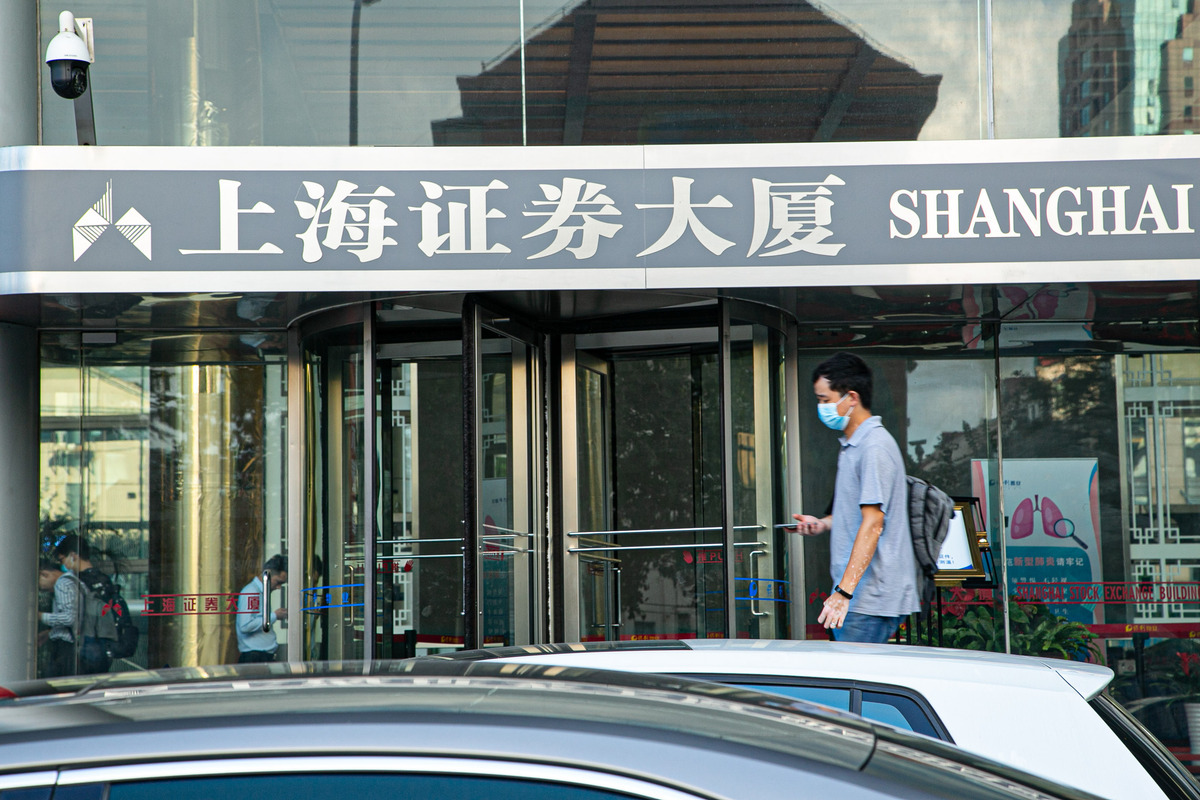
Seen as a milestone of China's supply-sidereform of the financial system and combat against debt risks, the country'sfirst nine infrastructure REITs went public on June 21 and achieved an averagegain of 5.21 percent, according to information provider Wind Info. China's ongoing capital market reforms madea breakthrough as the initial batch of public REITs, or real estate investmenttrusts, made a solid debut and ended in positive territory, officials andexperts said. According to conservative estimates, thescale of China's REITs market is expected to reach a range of 5 trillion yuan($782.5 billion) to 14 trillion yuan, experts said. China'sfirst REITs begin trading China's first batch of infrastructure REITsbegan trading on June 21, with five on the Shanghai Stock Exchange and four onthe Shenzhen Stock Exchange. The pilot REIT rose as the market opened onJune 21 and diverged later, closing between 14.72 percent and 0.68 percenthigher. The nine infrastructure REITs are expectedto channel investment into projects such as highways, industrial parks, storageand logistics, and sewage treatment. Bosera Funds' REIT, with an industrial parkbased in Shenzhen, Guangdong province, as the underlying asset, has led thegrowth and closed at 2.65 yuan (41 cents), compared with the offer price of2.31 yuan. The solid market performance hasdemonstrated investors' interest in the new instrument that not onlydiversifies the pool of investment products but marks a breakthrough in China'scapital market reforms that aim to strengthen support for the real economy,officials and experts said. "The development of the country'spublic REITs market has made a significant step," Chen Fei, an officialwith the China Securities Regulatory Commission, the country's top securitiesregulator, said while addressing the REITs listing ceremony of the ShenzhenStock Exchange, or the SZSE, via a video link. "We will focus on supporting theequity financing of assets that have mature operation, generate stable cashflow and are highly recognized by the market," he said. In 2007, China started to research for thelaunch of its REITs market. The instruments are widely found in overseas maturecapital markets. In April 2020, China initiated a pilotscheme for infrastructure REITs. In mid-May this year, the securities authorityapproved the registration of the country's first batch of nine REITs and, onMay 31, China kicked off sales of the REITs. As an important approach to realizing realestate securitization, REITs collect investors' funds and hand them over toprofessional investment institutions for real estate investment management. Infrastructure REITs allow companies tomonetize their infrastructure assets and apply sale proceeds to future financeprojects or debt reduction. The assets' operating records and ability togenerate positive cash flows will also reduce risks for investors, the reportnoted. The Shanghai Municipal Development andReform Commission released a notice on June 21 to develop the city into the"first-choice destination" of domestic REITs floats, while the SZSEsaid it will actively introduce more REIT projects and constantly improverelated rules. InfrastructureREITs to widen investment scope Proceeds raised by the nine pilot REITswill be mainly invested in infrastructure projects that help address weak linksin economic development, including highways, industrial parks, warehousing andlogistics, sewage treatment and power generation from garbage. For domestic investors, the pilot REITsprogram has provided a new investment tool that provides a relatively stablereturn and notable diversification benefit, experts said. "The launch of REITs has eased theaccess to real estate investment," said Zou Xuyuan, an analyst withBeijing-based Capital Securities. "The pilot REITs are expected to havedividend yields of no less than 4 percent in the next three years andparticularly cater to the needs of long-term investors," Zou said in areport. The launch of REITs will help existingmobile assets and different resources to fund new infrastructure investment,supporting the upgrade of China's infrastructure industry, experts said. Under current regulations, more thanfour-fifths of the money collected by a pilot infrastructure REITs program willinvest in securities backed by an in-use infrastructure project, and most ofthe income generated by the project will be distributed to investors. Dong Dengxin, director of the WuhanUniversity of Science and Technology's Finance and Securities Institute, saidthat different from the traditional debt financing mode for infrastructureinvestment, REITs are equity financing tools and could avoid running up debtswhen stimulating investment, he said. Dong said that though the nine pilot REITsin general have stable return prospects given the good quality of underlyingassets, it is still necessary for investors to note the risks brought by theshort-term volatility and take a long investment horizon. China will gradually expand the investmentscope of the pilot program of infrastructure real estate investment trusts, orinfrastructure REITs, a publicly-offered instrument investing in infrastructureprojects, the country's top securities regulator said last month. "The commission will enlarge the scopeof pilot infrastructure REITs at a proper and steady pace and actively nurturea diversified investor group," said Gao Li, a spokesperson of the ChinaSecurities Regulatory Commission. The CSRC will encourage institutionalinvestors such as banks, insurers, social insurance funds, and securities fundsto take part in REITs investment, improve rules and supervision, and ensure ahealthy development of the infrastructure REITs market, she said at a pressconference last month. Capitalmarket reform bears fruit The REITs issuance came after China kickedoff the pilot scheme for infrastructure REITs in April 2020, in a bid to deepensupply-side structural reform in the financial sector and enhance the capitalmarket's capability to support the real economy. Looking ahead, China plans to expand thecoverage of the pilot infrastructure REITs program at the right time and at asteady pace, said Gao Li. The CSRC will encourage institutionalinvestors like banks, insurers, social insurance funds, and securities funds totake part in REITs investment, improve rules and supervision, and ensure ahealthy development of the infrastructure REITs market, she Globally, the REITs market is found in morethan 40 countries and regions, with their assets under management surpassing $2trillion. Yang Zhihua, deputy Party secretary andchairman of the Supervisory Board at the SZSE, said the debut of REITs is ofgreat significance for the deepening supply-side reform of the financialsystem, increasing the proportion of direct financing, expanding investmentchannels and enhancing the ability of capital markets to serve the realeconomy. Robin Xu, associate director of UBSSecurities Research and head of regional industrials and infrastructure research,said many overseas institutional investors have shown great interest in China'sinfrastructure REITs market as the country has accumulated a large amount ofin-use infrastructure with good return prospects. "Different from many other economies,China has made a great deal of infrastructure investment over the past twodecades. The launch of REITs may have created a win-win scenario whereinvestors can receive decent returns while new infrastructure projects getfunded by securitizing in-use ones," Xu said. According to Xu, the estimated market sizeof qualified publicly offered infrastructure REITs in China can reach $5trillion in the future, equivalent to about one-third of the country's GDP lastyear. Compared with overseas mature markets,however, China's emerging REITs market still needs further and clearer taxincentives to thrive, and readily available English-language informationdisclosure and other measures to facilitate foreign investment will help turnforeign institutions' interest into real investments, he said. |