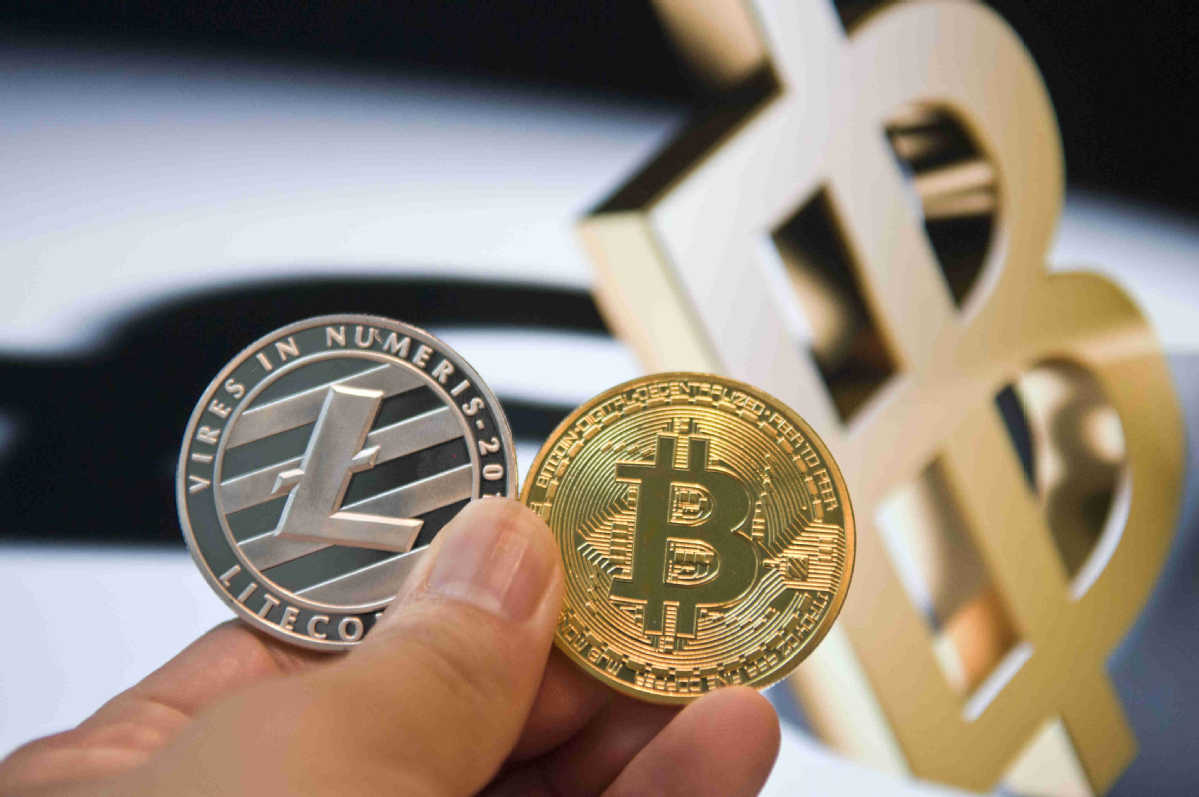
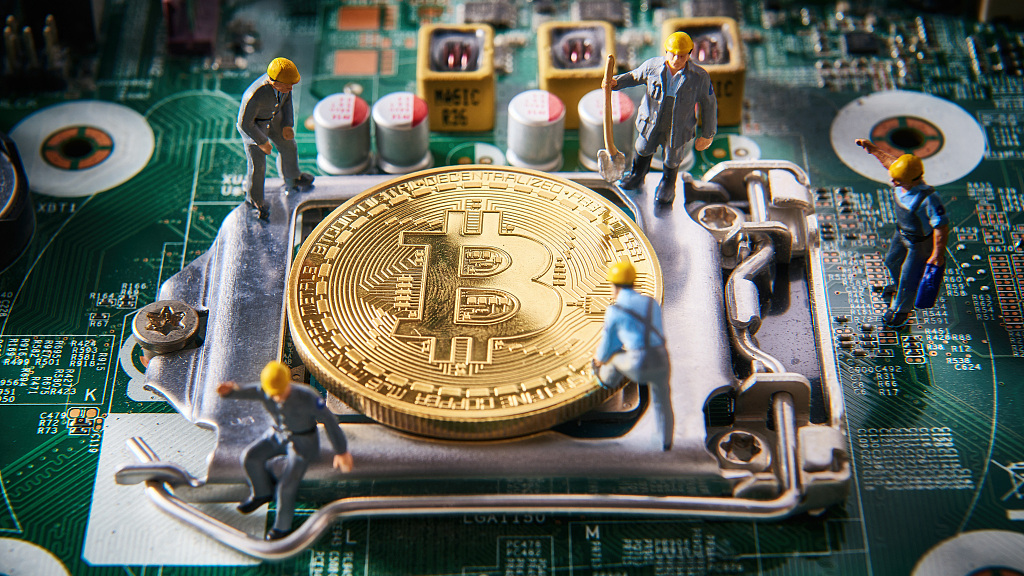
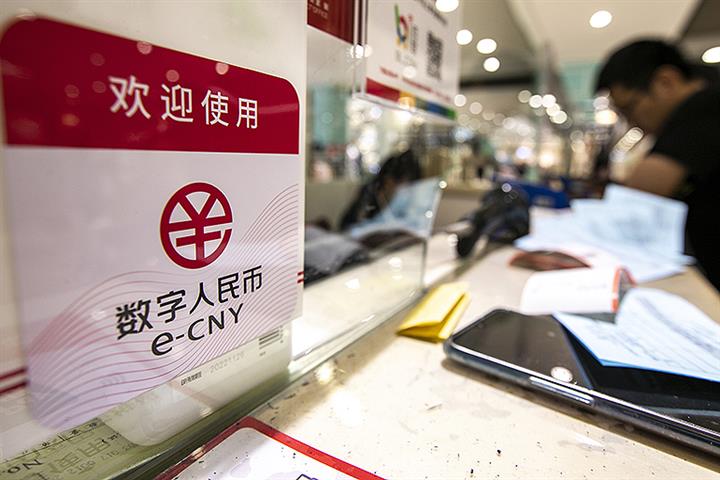
On May 18, the National Internet Finance Association of China, the China Banking Association and the Payment and Clearing Association of China highlighted the risks of cryptocurrency trading. The three financial industry associations issued a statement that bans financial and payment institutions from involvement in the cryptocurrency business, in the latest effort to clamp down on speculative trading and price volatility. Financial institutions, including online payment platforms, should not offer clients any service involving cryptocurrencies such as registration, trading and clearing and settlement, the statement said. It also forbids institutions from providing savings, trusts or pledging services for cryptocurrencies as well as related financial products. Bitcoin, the world's largest cryptocurrency by volume, hit a three-month low of $38,514.42 on May 20, nearly 40 percent below the peak of $64,829.14 in mid-April, according to CoinDesk, a news site specializing in cryptocurrencies. An index that measures sentiment in the bitcoin market, the Crypto Fear & Greed Index, has fallen to "extreme fear" levels not seen since April last year, according to a report on May 20 by Alternative, an international software service provider. Ethereum, another cryptocurrency, dropped by 5 percent on May 20 to below $3,200. Dogecoin, a cryptocurrency that started as a joke and has been talked up by Tesla CEO Elon Musk, fell 16 percent to $0.4189. According to BTC126.com, a Chinese fintech information platform, about 234,000 investors suffered large price drops in the cryptocurrency market which led to mandatory liquidations and total loses of about 14 billion yuan . Experts back government’s hard line on cryptocurrenciesChina should maintain its hard line on controlling virtual currencies to prevent wild speculation that may cause major financial losses to investors, according to experts. Cheng Shi, chief economist and managing director of ICBC International, said investors are concerned about large fluctuations and the "non-ideal" transaction speed of Bitcoin. Cryptocurrencies are unlikely to become a broadly used currency, as they are not supported by any real value, which may lead to price manipulation and digital fraud, Cheng said. In order to prevent market fluctuations that may hurt domestic investors, regulations are expected to be tightened to prevent financial risks, said Michael Taylor, a managing director of Moody's Investors Service. Chinese regulators have long seen cryptocurrencies, including Bitcoin and Ethereum, as crypto assets, instead of real currencies. The authorities closed all cryptocurrency exchanges in China in 2017 and banned initial coin offerings, which allowed enterprises to raise funds by issuing new digital tokens. Li Bo, vice-governor of the People's Bank of China, the central bank, said planning is underway to improve the regulatory environment for alternative investments to ensure speculation won't result in serious financial risks. Regulators are trying to balance digital innovations and risk control, as the digital economy rapidly expands, Li said. Shan Hui, Goldman Sachs' chief economist in China, said digital innovations are already the dominant driver of economic growth, accounting for over 60 percent of GDP growth from 2016 to 2019. In addition to tougher controls on the cryptocurrency business, recent regulatory measures have included antimonopoly rules, privacy and data protection and restrictions on online lending. These are necessary steps for regulators to catch up with the economic reality of rapid growth and significant innovation in the internet industries, Shan said. "In the short term, rules and restrictions are likely to slow growth in targeted areas. But in the longer term, they will help foster an environment for sustained competition and reduced risk," she said. Bitcoin extended its losses after the crackdown Bitcoin extended its losses after China vowed to crack down on the cryptocurrency's mining and trading activities. It was a doubled move against virtual currencies coming just after three Chinese financial regulators banned financial institutions from crypto-related businesses on May 19. China powers most of the world's bitcoin mining. According to data from the Cambridge Center for Alternative Finance, China accounted for over 70 percent of the world's computing power for bitcoin between September 2019 and April 2020. Cryptocurrency mining has drawn regulatory attention in China in recent years. In April 2019, China's National Development and Reform Commission put cryptocurrency mining on a preliminary list of industries it wanted to eliminate, citing concerns including energy-wasting and regulation. However, the final version released in November removed cryptocurrency mining from the list. In June 2019, China's central bank, the People's Bank of China, issued a statement saying it would ban all domestic and foreign cryptocurrency exchanges and Initial Coin Offering websites. By the end of April 2021, north China's Inner Mongolia Autonomous Region said it would "clean up and shut down" all cryptocurrency mining operations to reduce carbon emissions in the coal-based region. Beset by the escalating regulations in major economies, bitcoin failed to recover from its tumble week after Tesla's CEO Elon Musk's tweets doubting its environmental impacts. The U.S. Treasury Department on May 20 also called for new rules that would require large cryptocurrency transfers to be reported to the Internal Revenue Service and the Federal Reserve flagged the risks cryptocurrencies posed to financial stability. China's Hong Kong also proposed on May 21 that cryptocurrency exchanges operating in the city will have to be licensed by the markets regulator and will only be allowed to provide services to professional investors. At time of writing, bitcoin is traded at $37,000 each, about half from its all-time high a month ago of over $63,500 and similar to the level of the beginning of the year. China backs digital yuan at the same time Meanwhile, China is piloting its own digital yuan or e-CNY. The country has already started trials for the e-CNY in several cities including Shenzhen, Chengdu and Suzhou. Different from general cryptocurrencies such as Bitcoin, the e-CNY is controlled by a single entity, the Chinese central bank, as opposed to a decentralized network. Experts say the reason behind these moves is to lower financial risks and discourage speculative trading. "From my own research and the research of my colleagues, I already know two facts," Zhang Xiaoyan, associate dean of PBC School of Finance at Tsinghua University told CGTN. "The first is that a lot of these cryptocurrencies have been used in illegal transactions, for instance, transactions on drugs. These kinds of dark web transactions should not be encouraged," Zhang said, estimating that illegal transactions make up between one-fourth and one-third of all cryptocurrency exchanges. "The other fact I know from previous data and academic research is that there's a lot of manipulation in this particular market," Zhang said, adding that this is a new territory and regulations have not caught up yet. She said banning cryptocurrency transactions also aims to protect the backbone of the Chinese economy, small and medium-sized enterprises, which contribute over 60 percent of GDP and more than 80 percent of employment in the country, according to the Ministry of Industry and Information Technology. A number of foreign media and investors have argued that the ban was China's attempt to clamp down on the foreign digital trading market. Some have alleged that promoting the digital yuan is to help it replace the U.S. dollar in the future. Zhou Xiaochuan, president of the China Society for Finance and Banking, pointed out that the premise of this argument is wrong. "Some international media have argued that no matter what, the Chinese digital yuan will not be able to replace the dominant position of the U.S. dollar. I think that the premise of that argument is already wrong. The purpose of developing the digital yuan is to keep up with the modernization of payment systems, increase efficiency and lower costs. We did not design it to replace U.S. dollar," Zhou made the remarks at the Tsinghua PBCSF Global Finance Forum on May 22. On May 18, the southern province of Hainan completed its first payment with digital yuan in its cross-border import e-commerce. Earlier in May, several cities in China including Hong Kong Special Administrative Region also finished the first phase of tests using digital yuan for cross-border payments. Zhou said these moves boost the broader use of the Chinese yuan globally, noting that China is still at the early stage of the internationalization of the digital yuan and needs more policy support. |