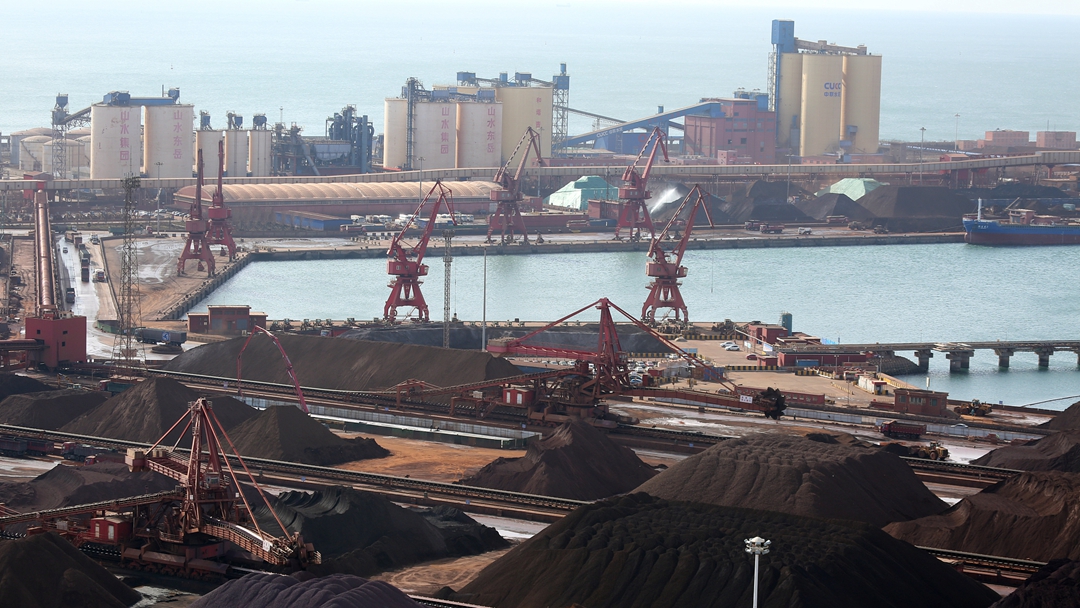
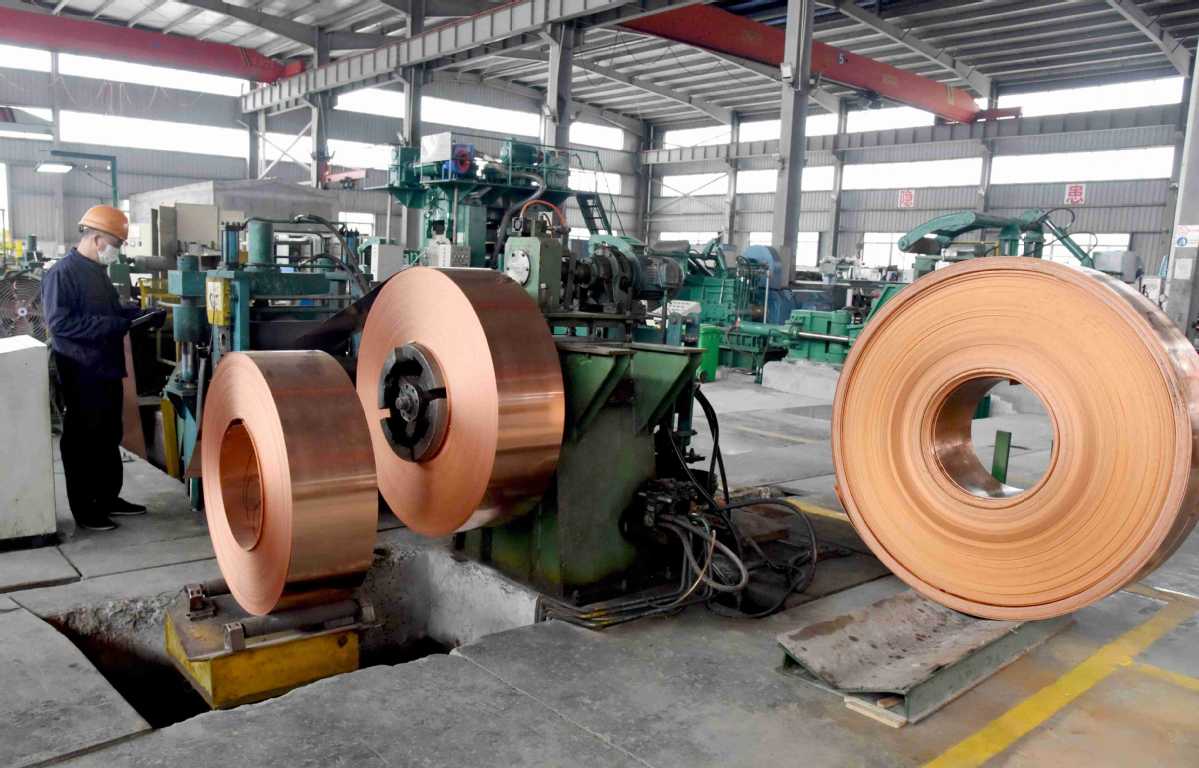
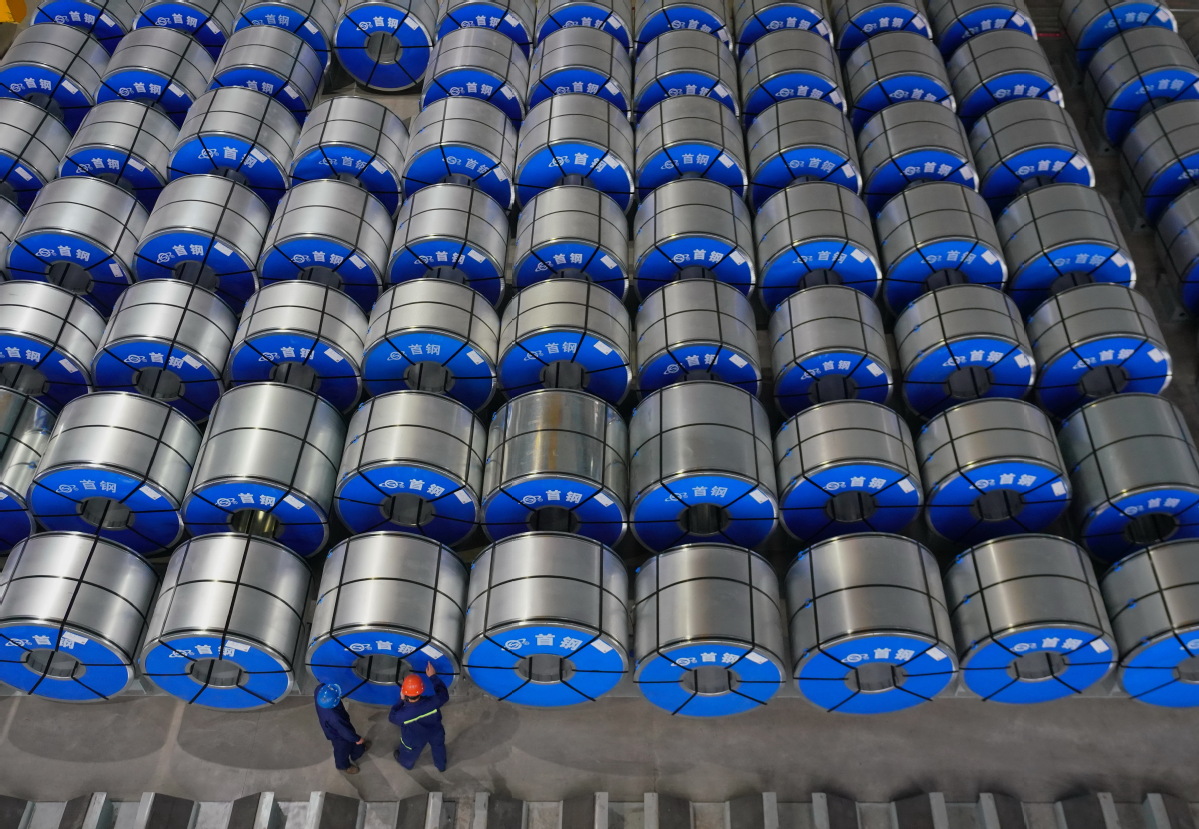
In an effort to curb the disorderly rise in commodity prices, Chinese regulators in May 23 summoned major businesses in industries, including iron ore, steel, copper and aluminum, and demanded that they stop manipulating market prices, hoarding goods and jacking up prices. They vowed to keep a close eye on commodity price movements, and step up inspections on the commodity futures and spot markets. They also pledged to implement "zero tolerance" on illegal activities, enforce monopoly agreements, and crack down on spreading disinformation and hoarding in the industry. Industry associations such as the China Iron and Steel Association and the China Nonferrous Metals Industry Association also attended the meeting. Among the watchdogs were the National Development and Reform Commission (NRDC), the State-owned Assets Supervision and Administration Commission of the State Council and the State Administration for Market Regulation. Chinese regulators warned commodity price manipulation The NDRC, China’s national economic planner, issued a press release on its website about the meeting on May 23. It said the sustained sharp rise in some commodity prices since the start of this year was the result of a combination of factors, including international transmission and excessive speculation, which has disrupted the normal production and sales cycle. Prices for 42 out of 50 major commodities rose over the April-to-May period, according to the Chinese National Statistics Bureau. Prices of steel and coal products surged over 10 percent on average from April to May, on top of a nine-percent inflation in steel in the first three months of this year, data from China's Iron and Steel Association showed. Boosted by the price surge in raw materials, China's producer price index, which measures costs for goods at the factory gate, recorded a 6.8-percent yearly increase in April, exceeding market predictions. The regulatory authorities demanded that relevant key enterprises take the lead in maintaining price order in the commodity market. They should not collude with each other to manipulate market prices, fabricate and spread rumors about price rises, or hoard goods for profiteering and raise prices. Key enterprises should move to promote the coordinated development of upstream and downstream industries and keep the industrial ecology healthy, the meeting said. The message caused domestic commodity prices to plunge on May 24, with the main futures contract for iron ore dropping more than 5 percent and rebar decreasing nearly 4 percent. The shares of iron and steel-related companies traded in Shanghai and Shenzhen also dipped 1.73 percent on Monday, according to Shanghai-based information provider Wind Info. For the next stage, authorities will closely monitor the trend in commodity prices, strengthen regulation over the co-movement between the futures market and spot market of bulk commodities and adopt a zero-tolerance attitude on irregularities, according to the meeting. It added that regulators will also resolutely investigate and punish illegal acts that result in the implementation of monopoly agreements, in accordance with the law. Enterprises and industry associations at the meeting pledged to regulate production activities and operate in keeping with the law to keep the market and prices stable. Prices of various commodities, including steel, have surged since the beginning of the year. Deformed steel bars, for example, were priced at CNY6,200 (USD964.1) per ton on May 13, surpassing the all-time record seen in 2008, and up from CNY5,200 per ton in late April. In an effort to curb excessive price hikes, officials of the NDRC and the SAMR went to Hebei province, China’s steel production base, on May 12 to study the situation. Since May 14, the black commodities, led by iron ore, have fallen across the board, with steel prices pulling back to early May levels. And on May 19, the State Council, China’s cabinet, called for curbing unreasonable rise in commodity prices and preventing the increases from being passed on to consumers. China takes multi-pronged measures to maintain steady economyFacing commodity price hikes, China vowed to take measures to ensure the supply of commodities, curb unreasonable price increases and prevent transmission to consumer prices at the State Council's Executive Meeting chaired by Premier Li Keqiang on May 20. The meeting called for careful analysis of reasons for the recent spate of rapid commodity prices increases and adopting measures in a targeted and holistic approach to ensure the supply of commodities and keep their prices stable. Since the beginning of this year, due to multiple factors especially the transmission of global price rise, some commodities have seen extended price rally, with the prices of some varieties hitting new records. The government must take very seriously the adverse impact caused by the price hike, and take both holistic and focused measures in light of market dynamics to exercise precision regulation, so as to ensure the supply of commodities and curb unreasonable price increases and prevent transmission to consumer price. "We must carefully analyze the reasons behind this round of rapid increase in commodity prices and focus on the crux of the issue, to adopt measures in a targeted and holistic approach," Li said. A host of steps was decided including raising export tariffs on certain iron and steel products, temporarily exempting tariffs on pig iron and scrap steel, and canceling export tax rebates for some steel products, to increase supply in the domestic market. Dedicated efforts will be made to advance structural adjustments and discourage projects with high energy consumption. The country's rich coal resources will be further tapped. Key coal companies will be encouraged to raise production and supply while ensuring safety, and the capacity of wind, solar, hydro and nuclear power will be increased to ensure energy supply during summer peak time. Opening-up will be pushed forward, to re-calibrate the import, export and buffer reserves of commodities, facilitate custom clearance and better leverage international and domestic markets and resources, to more effectively ensure supply and keep prices stable. Market regulation will be strengthened. Industry associations should play their due role in enhancing industry self-discipline. The regulation of futures and spot markets will be better coordinated and targeted measures will be taken when appropriate to screen abnormal transactions and malicious speculations. Irregularities such as making and executing monopoly deals, spreading false information, price gouging and hoarding will be dealt with to the full extent of the law and brought to light. "While the market continues to play a decisive role in resources allocation to ensure the supply of commodities and keep their prices stable, the government must better fulfill its responsibility. Any monopoly and hoarding will be cracked down upon under the law to step up market regulation," Li said. Efforts will be made to maintain the stability of monetary policy and keep the RMB exchange rate broadly stable at an adaptive, balanced level, to guide market expectations as appropriate. Assistance will be provided to help market entities, especially micro and small businesses and self-employed individuals, cope with rising costs and other difficulties in their production and operation. Policies to provide tax relief for micro and small enterprises and individually-owned businesses and refund all due VAT credits to advanced manufacturing enterprises on a monthly basis will be effectively implemented, and procedures for such concessional tax policies streamlined. Direct-benefit monetary policy tools will be well executed. Re-lending and rediscounting will be scaled up to underpin inclusive finance. Policies to incentivize reductions in the guarantee fees of financing for micro and small enterprises will be well exercised, to encourage banks to issue more credit-based loans. "Policies for tax and fee cuts and inclusive finance will be refined, and assistance to market entities in difficulty scaled up. All the temporary support policies must be fully delivered, to safeguard the lawful rights and interests of micro and small firms and self-employed individuals," Li said. |