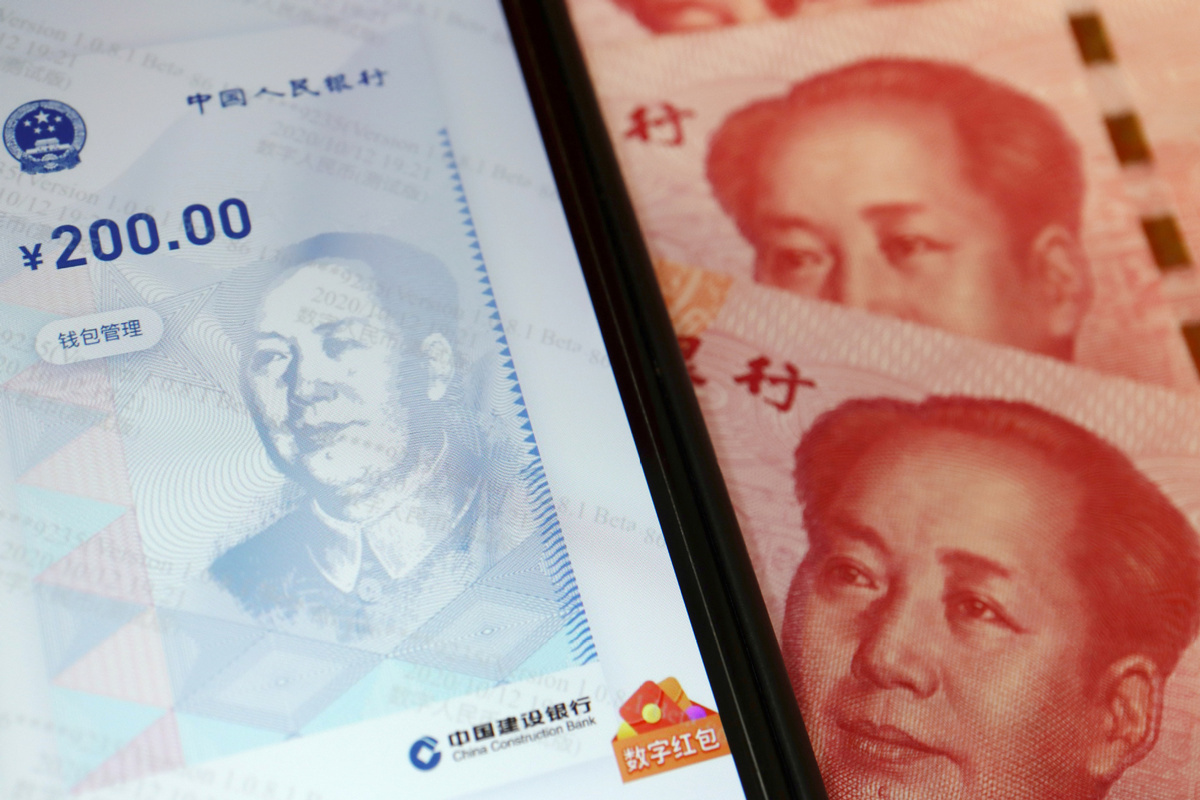
Several Chinese cities are using digitalrenminbi to boost consumption during the upcoming Spring Festival and promotethe use of the new form of currency. Beijing and Suzhou will issue a total of 40million yuan in the latest trials of the nation’s digital currency this week ina bid to boost consumption over the upcoming Lunar New Year holiday. Beijing will distribute 10 million yuan(about 1.55 million U.S. dollars) of digital currency to registered residentsvia lottery in virtual red envelopes, worth 200 yuan each. The city of Suzhou, east China's JiangsuProvince, will also issue 30 million yuan of e-currency, which can be spentfrom Feb. 10 to 26 both online and offline at designated shops. 'Red packet' e-currency test planned incapital A lucky group of people in Beijing willreceive a packet of 200 yuan ($31) a piece in digital currency from themunicipal government on February 4 for online and offline use during theupcoming Chinese Lunar New Year, a notice said earlier this month. The initiative is part of the trial of thecentral bank's digital currency, the e-CNY. Beijing will be the third city-afterShenzhen, Guangdong province, and Suzhou, Jiangsu province-to send thedigital yuan to consumers for testing. People who receive the "redpacket" after a random draw can use the e-CNY through certain apps or thedigital wallets of designated stores and restaurants in Wangfujing, one of thefamous business walking streets in China. They can also use e-CNY online, via the appof the e-commerce platform JD, according to a notice from Beijing LocalFinancial Supervision and Administration. The e-CNY in the Beijing trial can be usedfrom Feb 10 to 17. Six banks are participating in the test-Industrialand Commercial Bank of China, Bank of China, Agricultural Bank of China, ChinaConstruction Bank, Bank of Communications and Postal Savings Bank of China. China started large-scale, central bankdigital currency pilot programs in 2019. Beijing also plans to expand e-CNYusage to the upcoming Winter Olympics in 2022. The 10 million yuan in redpackets is one of the regular tests before the official launch, according tothe local notice. According to experts close to the People'sBank of China's digital currency institute, nine institutions-includingState-owned big banks and e-commerce giants-have been designatedby monetary authorities to develop digital wallets and related technology. Tosome extent, they are competitors in the digital currency payment service. To win the competition, the digital walletproviders should connect the service with some specific spending scenarios,such as payment in bookstores or hotels. Through this, the winner would rely ona mature payment ecosystem. One of the potential issues is that havingdifferent digital wallet operators could lead to data fragmentation or isolationof information, and the central bank may need to consider ways of controllingthe trans-action costs, said Huang Yiping, deputy dean of the National Schoolof Development at Peking University and chairman of China Finance 40 Forum'sAcademic Committee. The e-CNY's debut will intensifycompetition among payment service providers and probably change the marketstructure in the sector, said Huang, who expected the digitalized renminbi tosoon become Chinese people's digital wallets, "hopefully this year". Suzhou to launch second digital renminbilottery Suzhou city in East China's Jiangsuprovince will issue locals with digital currency worth a total of 30 millionyuan ($4.63 million) to pilot the new form of currency and boost consumptionduring the upcoming Spring Festival holiday, according to the municipalgovernment. The digital currency will be issued vialottery in virtual red envelopes, each containing 200 yuan. From February 5-6,local residents can register for the lottery on mobile phone apps and theresults will be announced on Feb 10. Lottery winners can spend the digital yuanfrom Feb 10 to Feb 26 in selected online and physical shops. Over 10,000businesses are expected to support payments using the currency during theperiod, covering groceries, daily necessities, catering and other areas. It is the second time the city willdistribute prizes as part of a pilot program for the new form of currencydeveloped by China's central bank, the People's Bank of China. In December2020, the city issued 20 million digital yuan for eligible residents to spendduring an online shopping festival. 20 million of virtual yuan was circulatedin the city in southeastern Jiangsu province from Dec. 12 to Dec. 27 in theform of digital red envelopes, traditionally used when making a gift of money,according to the Suzhou government. Suzhou has wrapped up a 16-day trial ofChina’s sovereign digital yuan, becoming only the second city in the country toexperiment with the e-money after Shenzhen, and witnessing a fairly balancedsplit between online and offline spending. Over 10,000 brick-and-mortar shopsparticipated and online purchases could be made through e-marketplace JD.comusing the Digital Yuan app. Some 44.7 percent of the e-money was usedfor online shopping and 55.3 percent was used in bricks-and-mortar outlets suchas shopping malls, supermarkets and restaurants. China's digital currency crucial for realeconomy China is leading the world in the developmentof a sovereign digital currency. The digital currency project is a virtual formof physical notes. The cryptocurrency uses up-to-date offline technology andcan still function even when users cannot get cellphone reception or access tothe internet. China started piloting digital currency insome selected regions across the country last year. According to a circularposted by the Ministry of Commerce last August, e-currency is piloted in theBeijing-Tianjin-Hebei region, the Yangtze River Delta, the Guangdong-HongKong-Macao Greater Bay Area and some eligible locations in midwestern China. The cities of Shenzhen, Chengdu and Suzhou,as well as Xiong'an New Area, assist in the pilot run, which will, asappropriate, be expanded to other regions of China, the circular said. In south China's Guangdong Province, theboomtown of Shenzhen has distributed digital currency worth 50 million yuan inthree batches since October 2020. The latest batch, totaling 20 million yuan,was issued in late January in the form of "red envelopes" for thosewho would stay in the city during the Spring Festival, which falls on Feb. 12this year. This year, digital currency has become akeyword in the provincial-level legislative and political advisory sessions.Beijing, Shanghai and Guangdong plan to promote digital currency pilotapplications in their local government work reports. Efforts are underway to include more peoplein this fast-developing digital era, making daily life easier and digitalpayments more secure. The significance of virtual RMB not onlylies in the currency digitalization, but also bears the historic responsibilityof driving the development of the real economy and economic ecosystem withfinancial technology innovation, said Lai Mingyong, vice chairman of HunanProvincial Committee of the Chinese People's Political Consultative Conference,the provincial political advisory body. Unlike non-bank payment platforms likeAlipay and WeChat Pay, which require users to link bank accounts, a digitalwallet with the e-currency deposit could be opened with any unique personalidentification such as a driver's license or a mobile phone number, said DongXimiao, a think-tank researcher with the Asian Financial CooperationAssociation. It is much easier to open a digital walletthan a bank account, which means China's unbanked population could potentiallybenefit from it and finally embrace the digital world, Dong said. |