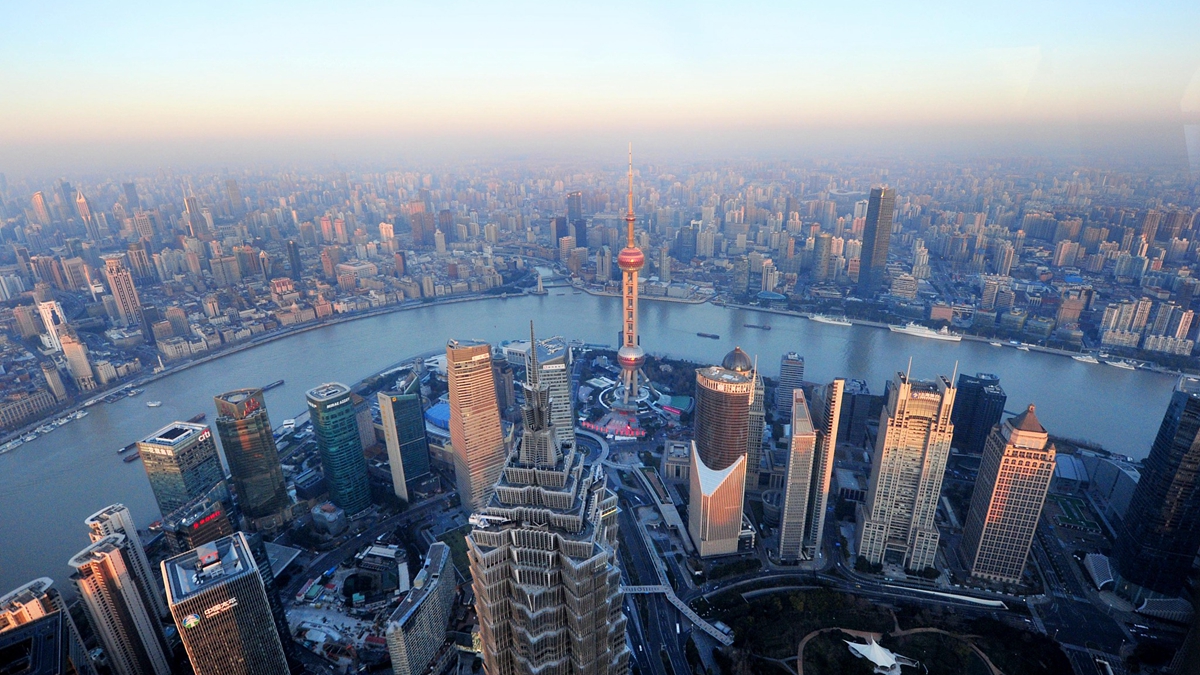
Over the past five years, since ChinesePresident Xi Jinping held the first symposium to boost development in theYangtze River Economic Belt (YREB), the country has given top priority to theregion's green growth while focusing on large-scale protection rather thanlarge-scale development. Significant changes have taken place alongthe Yangtze River, especially in terms of improving water quality and theecological environment. Three years ago, Chinese President XiJinping presided over a meeting on the Yangtze River Economic Belt, whichunveiled a new chapter for the conservation of the river and coordinated andinnovation-led development. The aim is to build the economic belt intoa golden economic belt featuring more beautiful ecology, smoother transport, amore coordinated economy, a better-integrated market, and more scientificmechanisms, President Xi said in April last year. Complexitiesremain Water bodies inferior to Grade V in theYangtze River Basin was eliminated for the first time in 2020, according to LuoGuosan, director of the Basic Department of the National Development and ReformCommission. Luo said that the proportion of goodcross-sections in the Yangtze River Basin increased from 82.3 percent in 2016to 91.7 percent in 2019 and further increased to 96.3 percent from January toNovember in 2020. The official added that the capacity ofurban sewage and garbage treatment has also been greatly improved. A largenumber of high-pollution and high-energy-consuming firms, together withthousands of illegal docks and projects on the coastline having been rectified,relocated, or shut down. "The 'ten-year fishing ban' in YangtzeRiver has been fully implemented, and the trend of biodiversity degradation hasbeen initially curbed. The finless porpoise, also known as the 'smiling angel,'is increasingly coming into our sight," said Luo. For centuries China's mother river ofYangtze has been nurturing its people and energizing the national economy.Comprising nine provinces and two municipalities, the YREB accounts for nearlyhalf of the country's population and GDP. The expansive growth and urbanization inthe region has come with the hefty environmental detriment of the waterquality, biodiversity, and environmental as well as residents' health. Despite remarkable achievements, restoringthe ecological environment of the Yangtze River still faces complexities, saidZhao Shixin, the deputy director of the water ecology department at thecountry's Ministry of Ecology and Environment. "In some areas of the YREB, there aregaps in industrial and urban infrastructure, and thus illegal pollutantdischarge still occurs from time to time. It is urgent to tackle non-pointsources of pollution in urban and rural areas, the imbalance of water ecosystemin some lakes and algae boom," Zhao explained. "We will continue to work on pollutedwater bodies, industrial parks, sewage outlets, nature reserves, and other keyareas." The prevention and control of pollutioncaused by ships and ports also requires to further raise the awareness ofenvironmental protection among people and gradually change the ship crew'sproduction and living habits, said Su Jie, the Deputy Director General of theComprehensive Planning Department of the Ministry of Transport. Su said the transport ministry willcontinue to work together with other government bodies to promote the greentransformation of shipping development in the Yangtze River while improving thenavigability of its waterways. YREBcontributes nearly a half GDP The total economic output of the YREBincreased from 42.3 percent in 2015 to 46.5 percent in 2019 and furtherincreased to 46.6 percent in the first three quarters of 2020, said Luo. With the implementation of relevantefforts, emerging industrial clusters in the YREB, including electronicinformation and equipment manufacturing, now account for more than half of thenational scale. The formation of the YREB transport channelhas accelerated, with high-grade waterways of the Yangtze River's trunk andbranch lines reaching tens of thousands of kilometers. All 14 port railway-waterway transportprojects have started construction. The construction of high-speed rail and theexpansion of airports along the Yangtze River are also proceeding in an orderlymanner. In terms of green development, Shanghai,Wuhan, and other cities and provinces along the river have figured out newpaths to take advantage of green mountains and clear water. By the end of 2020, China's top legislaturepassed a law protecting the Yangtze River, which will take effect on March 1this year and become the first Chinese legislation focused on the protection ofa river basin. China is also currently working on theimplementation plan of the 14th Five-Year Plan for the Development of theYangtze Economic Belt, said Wang Shancheng, head of the comprehensivecoordination group of the leading group office for promoting the development ofthe Yangtze River economic belt. Experts believed the improving legal andpolicy mechanism will take protective work of the Yangtze River into a newstage and provide a strong guarantee for the development of the YREB. Besides, the leading group office will furtherpromote piloting in the YREB region, thus provide experience and supportingpolicies regarding overall planning, funding, infrastructure construction forall 11 provinces and cities along the river. Integrationand Cooperation The economic belt, held high as a nationalstrategy and a task that carries political weight, is a priority for governmentofficials. Shanghai, Jiangsu, and Zhejiang are makingpolicies to share data on pollution and river transportation, and poolresources for entrepreneurship. Upstream provinces of Yunnan, Guizhou, andSichuan have established special funds to finance conservation efforts. The National Development and ReformCommission will coordinate the development of five major industries along theriver - electronics and information, high-end manufacturing, auto, electronicappliances, and garments. The industry layout will be planned with fullconsideration of their environmental impacts. Several inter-provincial infrastructureprojects are planned. A four-billion-yuan (about 635 million U.S. dollars)project is underway to build levees and allow bigger freight liners to sailfrom Anqing to Wuhan, about 386.5 km upstream. The depth of water, which is now 4.5meters, will be raised to six meters to accommodate 10,000-tonne ships. Xu Xianping, a counselor for China's StateCouncil, said some cities in the belt have successfully emerged from pollutionwoes and struck a balance between economic development and environmentalprotection. He cited the example of the city of Suzhou,where a blue algae outbreak in 2007 cut off water supply. Suzhou has shut down3,060 companies that were heavy polluters in the last ten years. Another city Zhuzhou, once a metal smeltingbase, has found new vitality in railway transport and auto and aviationindustries, Xu said. "Quality growth is the ultimate key tothe development of the Yangtze River Economic Belt. It requires innovation intechnology and management. Companies should invest more in R&D and bringingin talent," he said. Differentiation in economic positioning fordifferent provinces helps reduce competition. Shanghai has developed autos,electronics, aviation, and pharmaceutical industries. Wuhan is focusing on informationtechnology, health, and intelligent manufacturing. Chongqing is eyeing newenergy, artificial intelligence, and semiconductor-making. In the upstreamprovinces, where the environment is more vulnerable, agriculture and tourismare the priorities. "We must coordinate environmentalconservation and economic development. Clean water and lush mountains arepriceless assets. Areas that have upheld this philosophy are gaining vitalityin quality growth," said Zhang Yansheng, the lead researcher with theChina Center for International Economic Exchanges. |