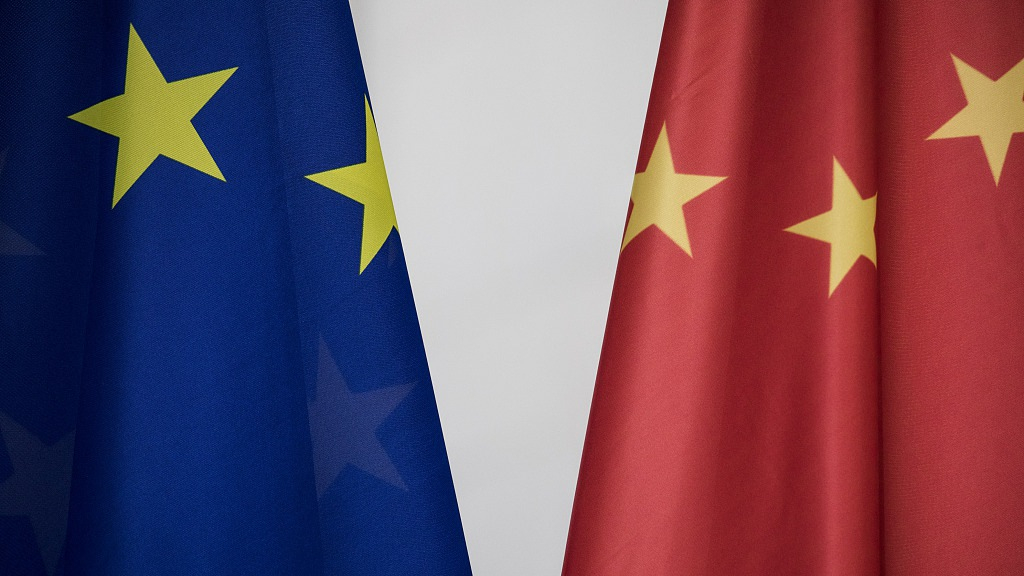
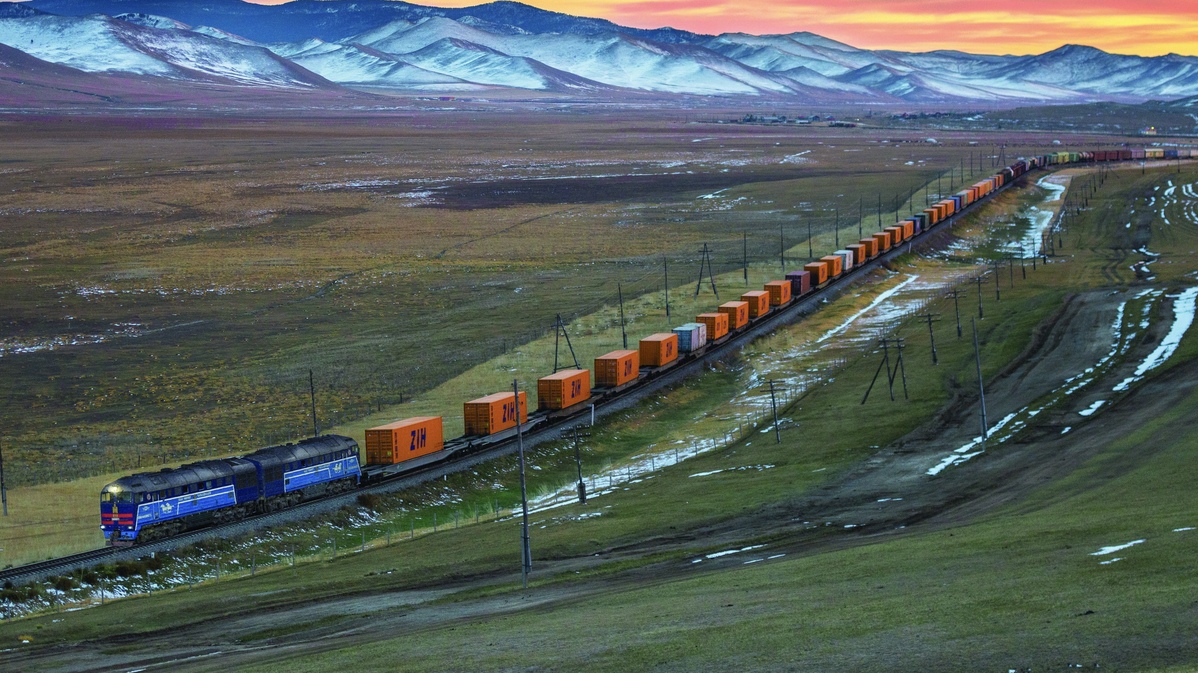
This year marks the 45th anniversary of the establishment of China-EU diplomatic ties. An emerging trend of television shows centered on women and their issues have been gaining popularity in China as the country's movie industry struggles to shrug off the pandemic's impact and people remain stuck at home, glued to online streaming platforms. China and the European Union (EU) have agreed to accelerate the negotiation of the China-EU investment agreement, and seal the deal within the year. The deal, when reached, will give European companies greater access to the Chinese market and to prevent the EU from increasing trade defenses. Chinese President Xi Jinping co-hosted China-Germany-EU leaders' summit on the evening of September 14 in Beijing via video link with German Chancellor Angela Merkel, whose country currently holds the EU's rotating presidency, European Council President Charles Michel and European Commission President Ursula von der Leyen. Prior to the meeting, the two sides signed a deal to protect each other's exported food and drink items from feta cheese to Pixian bean paste ahead of challenging discussions on trade, climate change and human rights at an online summit. The two sides will respect the names of 100 European regional food designations and 100 Chinese equivalents, meaning, for example, that China will only allow "champagne" to be used on sparkling wine from the French region of that name. China was the third-largest destination for EU agricultural and food products in 2019, worth 14.5 billion euros (17.2 billion U.S. dollars). After the deal comes into effect, the U.S., Australian or New Zealand producers will no longer be able to use the protected names on their exports to China, although there is a transition period for certain cheeses. China-Europe business dialogue held in Brussels The China-Europe Business Dialogue was held in Brussels on Sept 9, carrying the theme "Building Stronger Economic Partnership & Tapping into EU Digital Transformation". Romano Prodi, former president of the European Commission and two-time prime minister of Italy, Dimitrios Papadimoulis, vice-president of the European Parliament, and Ambassador Zhang Ming, head of the Chinese Mission to the EU, delivered keynote speeches via video link and deliberated on the broader picture of the current Sino-EU relationship. "Cooperation between China and the EU is very much necessary now, as global competition will change after COVID-19," Prodi said. "Globalization will not end, but will change. We must set the rules now, with a common approach." "It is crucial to avoid 'systemic rivalry' in the digital sector," Papadimoulis pointed out. "We have to intensify our efforts to further enhance cooperation. I fully agree with the Chinese Chamber that a regulatory framework on security and fair competition is absolutely necessary." Zhang said China and the EU have a common language on openness. He expressed the hope the two sides will work together and be open to each other's markets. In the digital sector, he said, "we need to establish an open, fair and nondiscriminatory business environment for everyone to benefit from the digital economy." The keynote speeches were followed by a one-hour online panel discussion. Moderated by Adrian Monck, managing director of the World Economic Forum, the panel featured Cheng Lan, general manager for Western Europe at China Mobile International; Yao Ling, director of the Institute of European Studies at the Chinese Academy of International Trade and Economic Cooperation; David Gosset, professor and founder of the Europe-China Forum; and Harald Patt, CEO of Fosun Europe Innovation Hub. During the event, Zhou Lihong, chairwoman of the China Chamber of Commerce to the EU, announced the formation of a digital working group to help Chinese businesses in the digital sector forge closer partnerships in the EU. She added the CCCEU will, together with Roland Berger, launch its 2020 Recommendation Report for EU institutions on Thursday, which will present Chinese businesses' latest opinions on the ease of doing business in the EU and their five key concerns and focuses, as well as eight policy proposals to Brussels to improve the bloc's business environment and enhance China-EU trade and investment ties. The event was organized by the CCCEU to provide a platform for businesses, governments, the broader public and the media to have a frank and consistent dialogue on pressing issues to maximize the benefits of digital technologies for humankind. China-Europe cargo trains drive Belt and Road cooperation After a China-Europe cargo train left east China's Jinhua for Baku in Azerbaijan on September 10, an inbound train carrying 50 containers of polyethylene arrived in the coastal city of Xiamen the next day. With the new Jinhua-Baku route, the number of China-Europe (Central Asia) freight train routes starting in Jinhua, Zhejiang province, has increased to 12. The train from Russia's Tobolsk was the first return train fully loaded with bonded cargo to Xiamen, Fujian province. As the coronavirus pandemic severely hits international transport, the China-Europe freight trains play a pivotal role in land transport among countries, as shown by the rising number of trains, opening of new routes, and the volume of goods. The China-Europe freight trains, first launched in 2011 in the southwestern Chinese metropolis of Chongqing, are running more frequently than ever this year ensuring trade and transport of epidemic prevention materials in both directions. They have been an important part of the Belt and Road Initiative proposed by China in 2013. By the end of July, the China-Europe cargo train service had delivered 39,000 tonnes of goods for epidemic prevention, providing strong support to international COVID-19 control efforts, data from the China State Railway Group Co Ltd showed. The number of China-Europe freight trains hit a record high of 1,247 in August, up 62 percent year on year, transporting 113,000 TEUs of goods, an increase of 66 percent. Outbound trains carry goods like daily necessities, equipment, medical supplies and vehicles while inbound trains transport milk powder, wine and automobile parts among other products. By Aug 20, Xi'an, a major city on the Silk Road Economic Belt, had launched 2,305 freight trains this year, transporting a total of 1.79 million tonnes of goods, 1.9 times and 1.8 times the number and volume respectively of the same period last year. Xi'an, the provincial capital of Shaanxi province, has 15 international trunk freight train lines, covering 45 countries and regions in central Asia, western Asia and Europe. During the epidemic, the China-Europe freight train service showed how it could promote win-win situation that would be mutually beneficial. It also highlighted the principle of extensive consultation, joint contribution and shared benefits embodied by the Belt and Road Initiative, said Chinese foreign ministry spokesman Zhao Lijian on Thursday. The China-Europe freight train has not only delivered to European countries anti-epidemic materials and daily necessities that are in short supply, but also shipped a large number of quality foreign products to China. "This is conducive to the resumption of production and the rapid economic restart of countries along the Belt and Road, providing a strong impetus to the stability of global industrial and supply chains, and bringing new opportunities for the recovery and development of the global economy," Zhao said. A number of Chinese provinces and regions have reported growth in foreign trade with Belt and Road countries. The China-Europe trains have accelerated the city's opening up, said Li Mingyuan, mayor of Xi'an. In the first half of this year, Xi'an's foreign trade grew 2.9 percent to reach 166.15 billion yuan (about $24.3 billion). In the first seven months, central China's Henan province saw its trade with Belt and Road countries increase by 28.8 percent year on year to reach 76 billion yuan. Trade between the eastern province of Shandong and countries along the Belt and Road hit 346.3 billion yuan, up 5.5 percent year on year, accounting for 30.4 percent of the province's total foreign trade. "Good connectivity is a hugely important factor facilitating growth in international trade. We believe that much of China's experience in terms of improving connectivity can be replicated elsewhere, to the benefit of trade, companies and local economies," said Jens Eskelund, vice chairman of European Chamber of Commerce in China and managing director of Maersk China Limited. According to China's Ministry of Commerce, from January to July, the non-financial direct investment of Chinese companies in countries along the Belt and Road reached $10.27 billion, up 28.9 percent year on year.
|