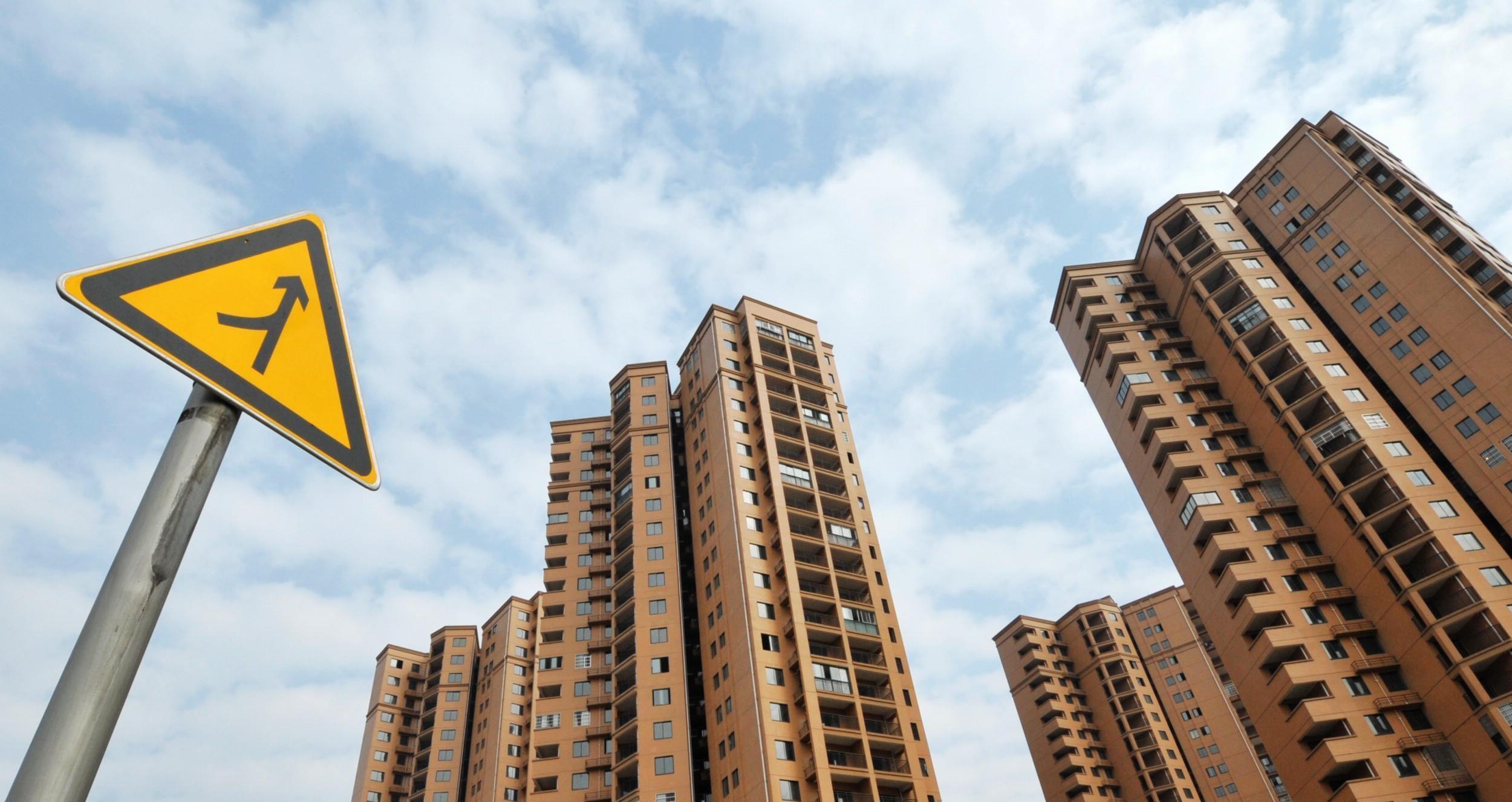
Shanghai residents who plan to buy newhouses need to calculate their scores first and check whether they are eligiblefor a lottery system. The seemingly complicated rules rolled out in Shanghairecently can effectively ensure houses in this megacity be allocated tofamilies with rigid needs. Under the principle that housing is forliving in, not for speculation, real estate control measures across China aregradually evolving to tackle housing problems in big cities. In early February, Shanghai started toexplore a score-based lottery system for housing sales, firstly satisfyingfamilies without housing as buyers far exceed the number of units on sale. In early March, Shanghai upgraded its controlpolicies to impose a five-year ban on the resale of new houses purchased byresidents who enjoy the preferential policy and cap the transfer prices of landfor housing development. "This new scoring system has made usfeel more at ease," said Zhou Yuanyuan, who has worked in Shanghai forfive years after graduation. Zhou and her husband planned to buy a newhouse in Shanghai but failed to buy one as the earlier lottery system had muchmore competitors. Now the lottery only allows 1.3 times the potential buyersfor the number of houses on sale. "We are a family with no house inShanghai and no purchase record in five years. Our score is at around 69, whichis quite a competitive score, and now we have a much higher probability ofbuying a desirable house," Zhou said. Major cities in China, such as Shenzhen,Beijing, and Guangzhou, have also rolled out measures to regulate and controlthe property market multiple times over the past year. In February, Shenzhen announced transactionreference prices for resale homes in the city, which are generally lower thanthe market prices. Many banks extend mortgage loans in line with the referenceprices in a bid to cool down the market. The city has also taken measures to preventthe illegal flow of consumer loans and business loans into the real estatemarket to clamp down on excessive market speculation. Since the beginning of this year, Beijinghas vowed to intensify the crackdown on misappropriating loans for housingpurchases. Guangzhou has successively introduced several policies, includingmortgage rate increases for residents' first and second houses, to curbspeculative demand. New home prices in four first-tier cities-- Beijing, Shanghai, Shenzhen, and Guangzhou -- rose by 0.5 percent, month onmonth, in February, following a 0.6 percent increase registered in January,according to data from the National Bureau of Statistics (NBS). The resale housing market in first-tiercities saw prices increase by 1.1 percent month on month in February. It edgeddown by 0.2 percentage points from January. Although the resale housing prices inChina's first-tier cities still lead the country, the rise has slowed down, andthe market in second-tier and third-tier cities has stabilized. Zhang Dawei, the chief analyst of CentalineProperty, said some home buyers in cities such as Shanghai and Shenzhencontinued to rush into the market despite upgraded property control measures,worried about losing their qualifications to buy houses. The prices of resalehomes in first-tier cities continued the upward trend of last year due toinertia, Zhang said. The spate of control measures has takeneffect in Shanghai's property market. So far, only one residential property inShanghai has triggered the scoring system because of excessive buyers. The Shanghai's Minhang District'scommercial housing sales staff said the number of buyers dropped significantlyafter the new system went into effect. With the new scoring system, buyers canno longer cheat in the lottery process by inviting many relatives or friends toparticipate on their behalf. Under the principle that housing is forliving in, not for speculation, cities across the country have unveiledstringent control measures, which have effectively helped curb speculativedemand and keep the market generally stable, said Zhou Jingkui with a realestate and urban development research center under Nankai University. China pledged to keep land and housingprices and market expectations stable and address prominent housing issues inlarge cities, according to this year's government work report. The term "housing is for living in,not for speculation" appeared for the third time in the government workreport in 2021. The policy signal is clear, said Ni Pengfei, director of theGlobal Urban Competitiveness Research Center for City and Competitiveness ofChinese Academy of Social Sciences (CASS). The property cooling measures in variouscities will be more targeted and effective. It will help keep the prices ofland and housing and market expectations stable in the future, Ni said. The central government needs to continue toremove real estate's impact on the local economy and unshackle localgovernments from performance evaluation pressure to truly uphold the principlethat housing is for living in, not for speculation, said Ding Zuyu, CEO of realestate service company E-House. Chinese authorities moved Friday to tightenthe regulation of business loans to prevent them from illegally flowing intothe property market. Banking financial institutions should bestricter on verifying the qualifications of business-loan borrowers, accordingto a document jointly issued by the China Banking and Insurance RegulatoryCommission, the Ministry of Housing and Urban-Rural Development and thePeople's Bank of China. Enterprises without any actual businessshould not be granted business loans, while new enterprises that have beenestablished or received equity rights for less than a year, as well asborrowers who have been in possession of a mortgaged property for less than ayear, should undergo more stringent examination, the document said. Banking financial institutions areinstructed to enhance investigations into the purposes of business loans,especially with borrowers who applied shortly after they concluded real-estatetransactions. The document called for boosting managementduring and after the loan services and strengthening the monitoring ofpost-loan capital flows. Business loans will be withdrawnimmediately if they are found to have been used in the property market, and theborrowers will face reduced credit lines and be investigated for legalresponsibilities, it said. Local authorities will carry out a specialinvestigation into the illegal inflow of business loans into the propertymarket before the end of May, and greater efforts will be made to rectify andpunish the irregularities, according to the document. Over a month after Shenzhen became thefirst city on the Chinese mainland to institute a reference price list forsecond-hand homes, the effects of the new housing policy are being felt. According to the Shenzhen Real EstateIntermediary Association, the southern city's second-hand home market hascooled down sharply after the latest measure was imposed on Feb 8 — four daysbefore the start of the Spring Festival holiday. Transactions plunged to 362units from Feb 15 to 21 — an over 80 percent drop compared to the weeklyaverage of 2,500 units in the weeks before the policy was launched.Transactions bounced back to 991 units from March 1 to 7, which are still muchlower than the previous level. Real estate agents in Shenzhen's downtownFutian district said there had been no property transactions in recent days asbuyers and sellers sit on the fence. "Homeowners refuse to unload theirproperties in accordance with the government's reference prices, which arelower than those in the market. Some have put off selling their properties,while buyers are also conservative as they're unclear what the future markettrend will be," said an agent at Shenzhen Centaline Property. The Shenzhen Housing and ConstructionBureau issued the reference price list on Feb 8 for second-hand homes in 3,595residential communities in response to the city's runaway property market, withaverage prices for such homes having risen to 66,000 yuan ($10,150) per squaremeter last year — up 10 percent year-on-year — according to Leyoujia ResearchCenter. The trend hasn't stopped. The NationalBureau of Statistics said prices for Shenzhen's second-hand homes rose by 15.3percent in January, compared to the same month a year ago. The Shenzhen authorities said the latestmeasure is aimed at guiding real estate agencies in issuing reasonable pricesand helping banks to check loan risks through a higher level of informationtransparency. A day after the new policy came intoeffect, real estate agencies moved all price listings from their offices andapps. Wang Feng, director of the Shenzhen RealEstate and Urban Construction Development Research Center, said referenceprices for about 62 percent of the 3,595 residential communities were based ontheir transaction prices last year. But in about 27 percent of the communities,mostly in the popular districts of Futian, Nanshan and Bao'an, the listedprices were still too high and there's a need to "squeeze thebubble", Wang said. The remaining 10 percent were given reference pricesbased on market evaluation due to the lack of transaction information. Analysts warned that homebuyers might nowhave to make higher down payments if bank loans are based on the officialreference prices. For example, for an apartment valued at 5million yuan, a bank would previously lend a first-time buyer 3.5 million yuan,or 70 percent of the property's market price, and the buyer would need to forkout just 1.5 million yuan as down payment. But now, if the government sets theunit's reference price at 4 million yuan, banks would grant a loan of only 2.8million yuan, and the buyer would have to make a down payment of up to 2.2million yuan. State-owned lenders, including the Bank ofChina, Industrial and Commercial Bank of China, China Construction Bank and theAgricultural Bank of China, said they will use the government's listed pricesas an "important reference" when granting housing loans. Ping An Bank and the Bank of Communicationswent further, saying the reference prices will be the criteria for issuingloans. Li Yujia, chief researcher at the GuangdongHousing Policy Research Center, believes the transaction volume of Shenzhen'ssecond-hand apartments will shrink in the coming months and prices will stayflat as the new policy has a cooling effect on the market. Some popular areas, where housing pricesrose sharply last year, can likely see significant price drops, he said. But Li disagreed that Shenzhen's spiralinghome prices are caused by the imbalance between supply and demand, arguing thatthe fundamental issue is the problem of leveraging. Only when financialregulators, banks and relevant parties join hands to control financing can thecity's housing prices be checked, he said. Although the new housing policy is aimed atcurbing speculation, some eager homebuyers said they've been hurt. "Few homeowners will sell their assetsbased on the government's reference prices. The result is that buyers now haveto make heavier down payments," said Yang Kunxian, a 32-year-old insuranceworker, who has been looking for a second-hand home for several months. "My wife and I have saved just enoughmoney to buy a 60-square-meter flat in Futian. We may now have to save up moremoney and buy later." |