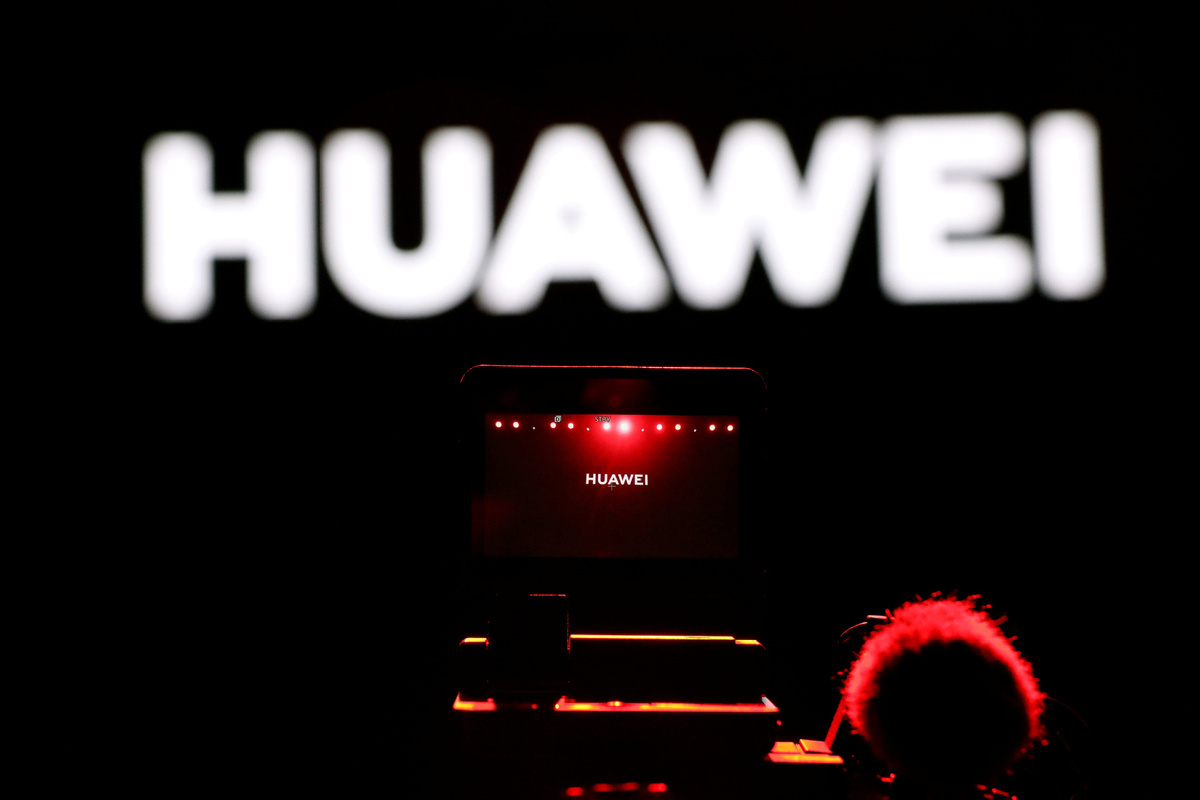
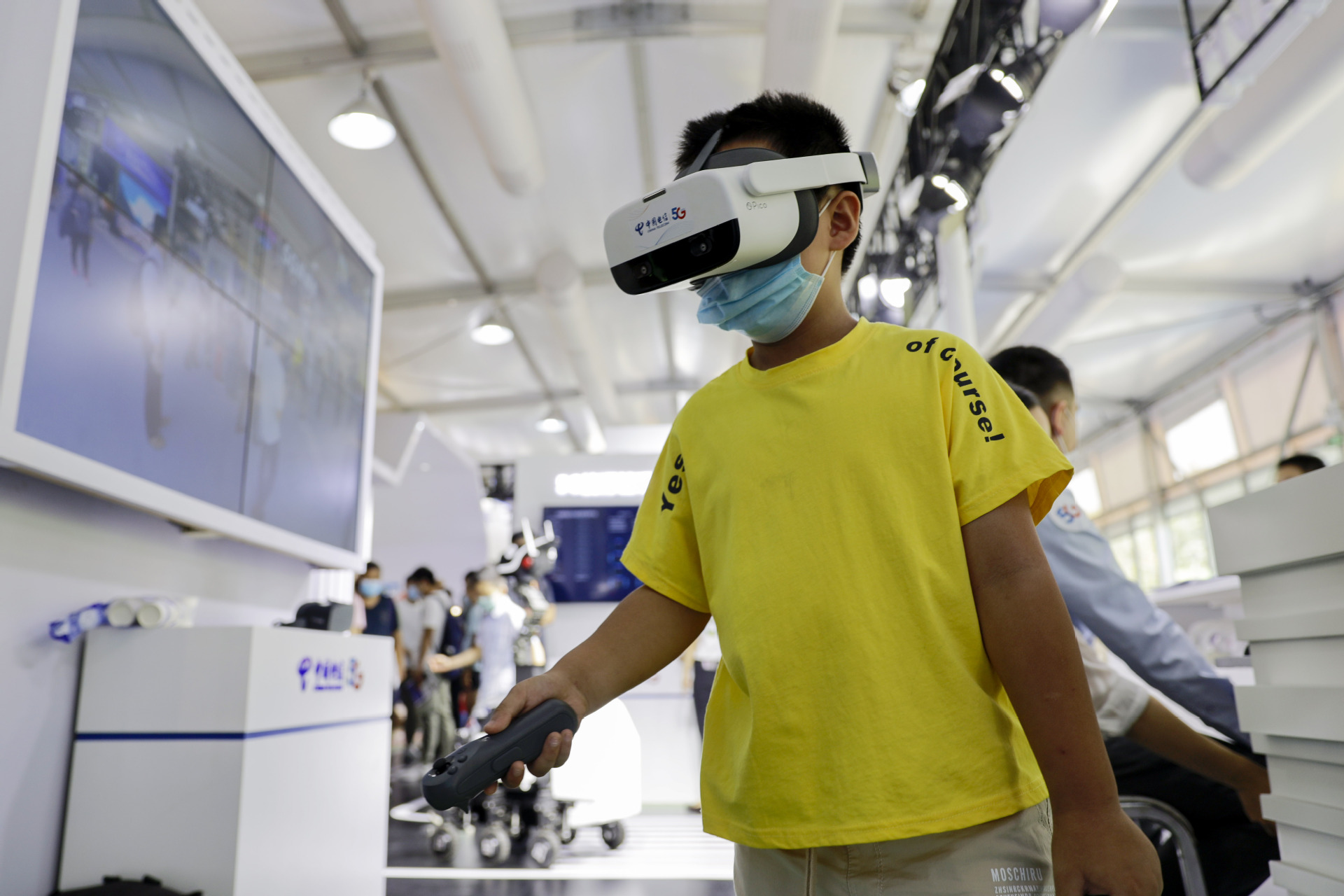
China’s pivot to domestic production of hi-tech products is gathering pace as the country looks to shake off dependence on foreign technology in light of decoupling threats from the United States. President Xi Jinping announced in May a new “dual circulation” strategy, which will focus on making the domestic economy more resilient in an increasingly hostile external environment. Relations between China and the US have in recent months plummeted to the lowest point in decades, as the two powers clash on issues ranging from the coronavirus pandemic to Hong Kong to trade. In the tech sphere, the Trump administration has aggressively targeted Chinese companies like Tencent and Huawei with sanctions in a bid to starve them of American technology. Beijing’s focus on home-grown technology development to offset the geopolitical challenges is proving a golden opportunity for some Chinese tech firms, but it has created confusion and concern for others, industry experts said. “In contrast to the previous few years, we are feeling and witnessing a growing enthusiasm to replace imported components with domestic parts – and we are definitely the beneficiaries,” said Zhong Musheng, founder of Dongguan VIDE Technology, which produces photoelectric devices and micro motors. “Many Chinese firms used to be afraid of using domestically produced parts, but now that has changed significantly.”Aaron Zhang, founder of drone start-up Simtoo Tech, said his firm still imported chips and core parts from the US, but was making a backup list of domestic suppliers in case there was a full decoupling between the world’s two largest economies. Chen Jianhua, vice general manager of smart home device producer Newtempo Tech in Guangzhou, said his company had bought high-quality imported parts to ensure export competitiveness in the past, but that was changing. “We focus more on the domestic market, to be honest, it does not need such high-end products but prefers cheaper ones,” he said. Authorities in recent months have begun hammering home the concept of “independence and controllability” in the fields of science and technology, said Dr Frank Cui, a specialist consultant for both state-run and private companies and researcher with the Hong Kong-based International New Economic Research Institute. “The aim is to create an internal system in the next six to seven years for the ‘three domestics’: domestic research and development, domestic manufacturing, and the domestic market,” he said. Under the new strategy, local governments and state enterprises will boost support for Chinese tech companies that use domestic components, with the aim of creating a more controllable supply chain – from research and development (R&D) to manufacture – in case access to foreign technology is cut completely, Cui said. The more strongly a firm embraces self-sufficiency – or plays the victim of Western sanctions – the greater its chances of getting orders and subsidies from the central and local governments, industry experts said. But there are worries that China’s aggressive push to expand domestic development could backfire. “If the technology war escalates and the achievements of scientific and technological innovation cannot be shared universally, it is very possible that China and the West will have two different systems for hardware and algorithm development – and they will not be compatible with each other,” Cui said. “Which set of systems will be more competitive in the future? It will ultimately depend on demand.” James Yang, a former Huawei engineer who now works for a Shenzhen robotics company, raised a note of caution on relying heavily on domestic development.“Even though China’s domestic market is so huge that it can sustain large-scale tech businesses that smaller economies can’t, few Chinese engineers and R&D workers would welcome technological isolation or solely internal circulation in the tech sector,” he said. “You can use the US-Soviet hegemony period as a reference. The Soviet Union government concentrated its strength on ensuring the superiority of its military technology, but civilian technology fell behind due to insufficient market demand and technological isolation.” Still, initial enthusiasm for Xi’s internal circulation in the tech sector has been strong. Firms such as China Telecom, the largest state-owned enterprise in the telecommunications sector, have already joined the campaign to replace foreign components made by big US manufacturers like Intel, Microsoft and IBM. In May, it placed sizeable orders for Huawei’s Kunpeng server chip, breaking Intel’s previous monopoly position with the company. China Telecom said it would buy up to 56,314 servers this year, one-fifth of which would use home-grown Kunpeng and Hygon Dhyana chips over products from Intel and AMD. In July, robotics start-up CloudMinds, which has been included on an American economic blacklist, abandoned plans to go public in the US and moved its headquarters to Shanghai. The company has received financial support and contracts from a wide range public institutions, from hospitals to local governments to state-owned enterprises. Huawei Technologies Co said on September 10 ,2020 that its in-house operating system HarmonyOS will be used in smartphones next year, marking a breakthrough in Chinese companies' efforts to commercialize self-developed operating systems and to build their own globally competitive software ecosystems. Analysts said the increasing use of HarmonyOS showcases Huawei's resilience and technological prowess, but challenges still exist as the latest US chip bans weigh on Huawei's smartphone business. Yu Chengdong, CEO of Huawei's consumer business group, announced the system update HarmonyOS 2.0 at its annual developers' conference on Thursday in Dongguan, Guangdong province, and said the system will be used in its smartphones next year. HarmonyOS was unveiled a year ago, after Washington restricted Huawei from using Google's Android operating system. HarmonyOS is arguably the biggest push by Huawei to build its own software ecosystem, and it is already used in Huawei's smart TV products. With the upgrade of the system, HarmonyOS will be used in smartwatches, personal computers and other internet of things devices later, Yu said. The progress came after the US government expanded a series of chip restrictions on Huawei in the past few months that have limited its access to semiconductor components and equipment produced by companies using US technology. Jia Mo, an analyst at market research company Canalys, said the tightened restrictions will result in a shortage of chips for Huawei to produce enough smartphones next year, which will make it difficult for the company to popularize HarmonyOS on its handsets. But the US government is also facing mounting pressure from the country's own semiconductor association and chip companies. This may force it to relax the regulations in the near future, experts said. Gao Feng, a spokesman for the Ministry of Commerce, said on Thursday that as China is a major global manufacturing powerhouse of electronic products, its demand for semiconductors has been growing steadily, and the nation has become a major driving force of the global semiconductor market. Boston Consulting Group said in a report that if the US government increases restrictions on semiconductor trade with China, this could endanger the country's own position as a leader in the sector. BCG warned that if shipments of US chips and chipmaking equipment to China were stopped, and China were to ban imports of US electronics and software, it could cost US companies 37 percent of their annual sales. To cope with Washington's restrictions on the use of Google Mobile Services, Huawei has also been working hard to build the ecosystem for Huawei Mobile Services, better known as HMS, which is the foundation of its ability to sell smart devices in overseas markets. Huawei said the mobile applications integrated with HMS so far have exceeded 96,000. The number of developers of HMS now stands at over 1.8 million. Charlie Dai, principal analyst at market research company Forrester, said: "The US government's bans leave Huawei no choice but to accelerate research and development to build an open tech ecosystem of its own, from hardware to software for smartphones. It's a tough journey but Huawei must go through it to survive and thrive." He said Huawei has made substantial technological progress in areas like audio, video and augmented reality for HMS, which effectively drives the growth of its developer ecosystem.But currently, the growth is chiefly driven by domestic app developers, and more efforts are needed to attract overseas developers to embrace HarmonyOS and HMS, said Xiang Ligang, director-general of the Information Consumption Alliance, a telecom industry association. "Huawei has no choice but to continuously strengthen its products and grow its ecosystem. That will also be the pathway for most Chinese companies to compete in the global arena, as Washington intensifies its crackdown on Chinese technology enterprises," Xiang added. Semiconductor and smartphone industries worldwide, including those in the United States, are bracing for extreme disruptions after Washington recently tightened its restrictions on Chinese tech giant Huawei's ability to obtain critical components, most significantly, chips. On Aug 17, the US Department of Commerce (DOC) announced its decision to require foreign manufacturers using US technology to get a license if they plan to sell semiconductors to Huawei. Intended to curb Huawei's growth, the new rule will send out a chilling wave across global supply chains, analysts say. Last year, the DOC essentially banned US firms from selling Huawei chips made in the United States. In May, the DOC amended a rule to target Huawei's acquisition of semiconductors that are the direct product of certain US software and technology. Though the May restriction severed Huawei's supply of custom-made chips, the Chinese company could nonetheless buy off-the-shelf chips designed by a third party. However, with the latest move, Washington "further restricts Huawei from obtaining foreign made chips developed or produced from US software or technology to the same degree as comparable US chips," the US department said on its website. "The move is the latest and potentially most serious effort by the US government to choke off the company's ability to obtain advanced semiconductors for all of its business lines," the CNBC quoted Eurasia Group, a political risk consultancy, as saying. In response, Chinese Foreign Ministry spokesman Zhao Lijian told a press briefing earlier this month that the United States has been abusing the concepts of national security and state power to impose various restrictions on Chinese companies, which constitutes "a blatant hegemonic act." Behind the move, observers say it is the sole superpower's chip dominance that gives Washington a "powerful weapon" against the Chinese company. Geoff Blaber from the research and advisory company CCS Insight told the Nikkei Asian Review that while the semiconductor industry is "global in nature," its foundation "is very, very heavily based on" the United States. "The leading players in chip design software are all American companies," according to a report by the Nikkei Asian Review last week. "Chip fabrication, like design, relies heavily on US-made chipmaking and chip testing equipment." Shortly after Washington's decision, the country's Semiconductor Industry Association (SIA), which represents 95 percent of the US semiconductor industry, was surprised and concerned. "We are still reviewing the rule, but these broad restrictions on commercial chip sales will bring significant disruption to the US semiconductor industry," SIA President and CEO John Neuffer said in a statement on the association's official website. "We reiterate our view that sales of non-sensitive, commercial products to China drive semiconductor research and innovation here in the US, which is critical to America's economic strength and national security," the statement added. With the termination of sales to Huawei, which bought $19 billion in components from US firms last year, "technology bosses fret that their government's actions will drive investment away from them to rivals in other countries," the Economist magazine reported this month. Meanwhile, according to a March report by the Boston Consulting Group, over the next three to five years, US companies could lose 18 percentage points of global share and 37 percent of their revenues if the United States "completely bans semiconductor companies from selling to Chinese customers, effectively causing a technology decoupling from China." These drops in revenue, the analysis warned, would "inevitably lead US semiconductor companies to make severe cuts in R&D and capital expenditures, resulting in the loss of 15,000 to 40,000 highly skilled direct jobs in the US semiconductor industry." Omu Kakujaha-Matundu, a lecturer and economist from the University of Namibia, told Xinhua that Washington's Huawei ban is not in line with international trade practices of fair market access and is also detrimental to the introduction of technological advancement anywhere in the world. "This now stops (US chipmakers) Nvidia, Intel, everyone, and they were not impacted before," an industry expert told the Financial Times, adding that the tighter restrictions would affect billions of dollars in business across the sector. Among the first batch of victims, the Taiwanese chipmaker MediaTek's share price plunged by 10 percent on the news. Shares in Japanese electronics titan Sony also fell more than 1 percent on Aug 18. Over the long term, as The Wall Street Journal editors wrote in June, other countries may face a more difficult choice. "Foundries in Southeast Asia that rely on Huawei's business may resent being subject to extraterritorial US rules, and one risk is that those governments are pushed closer to Beijing. Huawei will also accelerate its efforts to make chips using its own know-how and take a faster technological leap." Similarly, noting that "Huawei is determined to succeed and has considerable research and development resources," The South China Morning Post said in an editorial on Saturday that instead of seeing off competition, the US administration is "speeding up Chinese self-reliance." The chip ban, as David P. Goldman, a columnist for news platform Asia Times said, gives the world "an enormous incentive to circumvent" the United States, raising the risk that the United States rather than China "will be left without a chair when the music stops." |