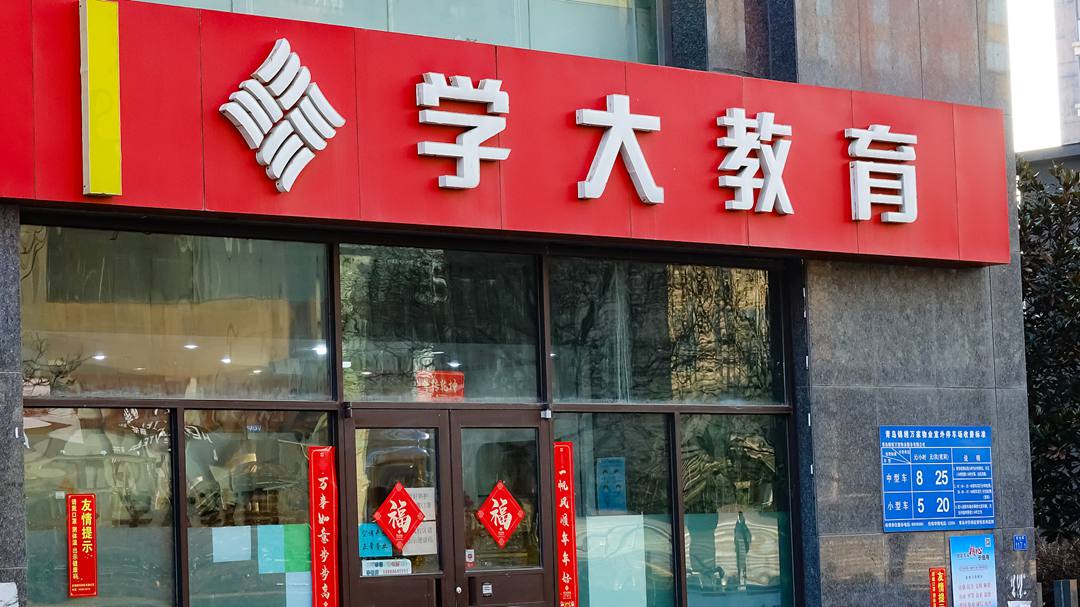
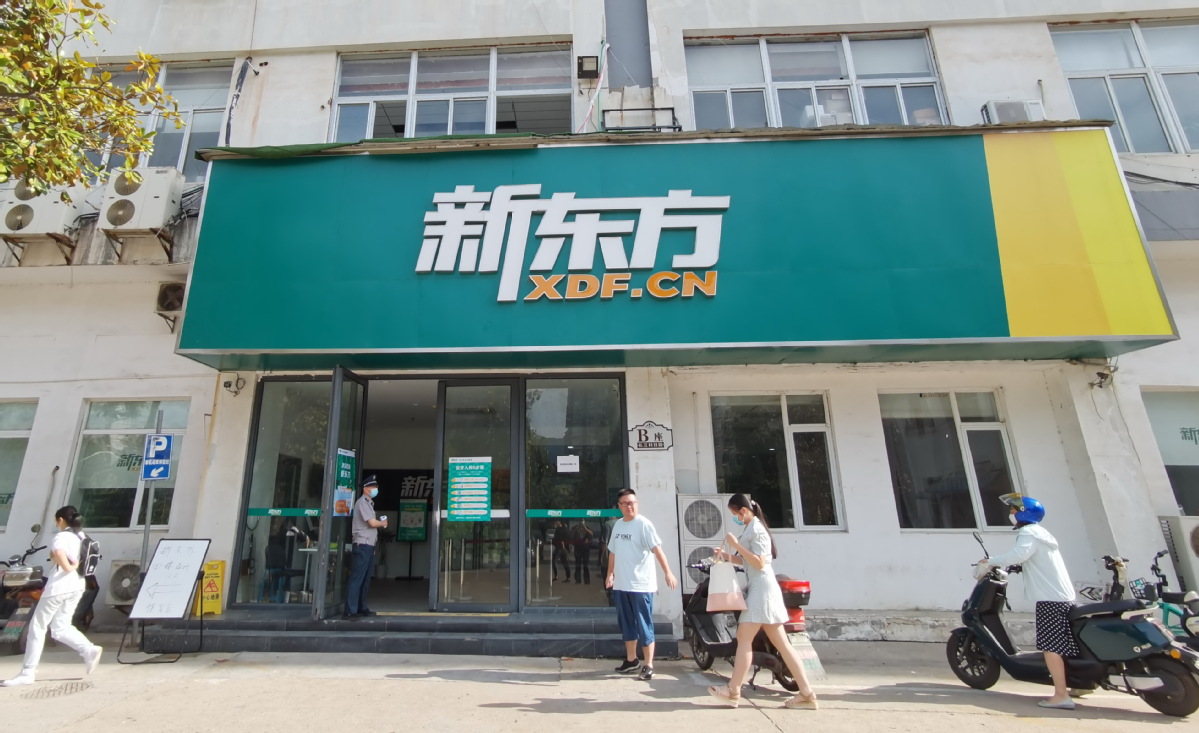
On July 24, the general offices of theCommunist Party of China Central Committee and the State Council, China'sCabinet, issued a guideline proposing wide-ranging reforms in the privateeducation sector. Aiming to further improve schools'educational and teaching quality, effectively reduce students' burden fromafter-school tutoring as well as lower education costs. China issued sweepingrules to regulate its after-school tutoring industry worth billions of dollars,The new rules would prevent firms teaching school curriculum from making aprofit, raising capital or going public. China bans tutoring institutions in coreschool subjects from IPO. Relevant departments from all regions in China willno longer approve the establishment of tutoring institutions in core schoolsubjects for students in the compulsory education phase, and existinginstitutions will be registered as non-profit institutions, the rules said. The new rules triggered a heavy sell off inthe shares of tutoring companies when they were first announced. The countrynow has 24 listed education companies on different stock markets on the Chinesemainland, Hong Kong and the U.S., with latest capitalization in total topping150 billion yuan ($23.14 billion) as of July. Beijing's market regulator has fined threetutoring firms for acts such as false advertising, running unlicensed schoolsand illegal pricing, the Beijing Youth Daily reported on August 2. The three firms – Xueda Education, ABCForeign Language School and 51talk – were fined a total of 1.92 million yuan($297,000). 51talk is also known as China Online Education Group. The threefirms did not immediately respond to requests for comment. Beijing's market regulators have to dateinspected 956 online education and training institutions, filed 528 cases andpunished 139 of these. Chinese private education companies,especially the listed ones, are quickly evolving future moves in response toguideline released on July 24 that all institutions offering private tuitionsto school students will henceforth be registered as nonprofit organizations,which caused a massive sell-off in related stocks on bourses in China and theUnited States. In China's billion-dollar tutoring andonline education (or edtech-educational technology) sector, companies typically offer a bouquetof extracurricular products and services. Some of them are even listed on theUS bourses. Edtech companies will no longer be allowedto raise capital through IPOs. Listed companies and overseas investors arebarred from investing, or acquiring stakes, in education firms that teachschool curricula. Foreign firms are also banned fromacquiring or holding shares in institutions engaged in tuitions related toschool curricula using variable interest entities or VIEs. Analysts said listed companies may face therisk of delisting or have to spin off school curricula-related businesses. The guideline also noted that the main aimof the reform is to significantly reduce the excessive burden of homework andafter-school tutoring on primary and middle school students. Market insidersinterpreted guideline released as a signal to further transform the edtechsector quickly. Investors on July 26 resorted to a massivesell-off in edtech stocks-a sign that markets expect tough times ahead for the sector. China'seducation industry subindex of the A-share market dropped 8 percent. In terms of individual stocks, New OrientalEducation& Technology Group Inc, Koolearn Technology Holding Ltd and ChinaBeststudy Education Group all dropped between 30 percent and 40 percent on theHong Kong stock exchange on July 26. On the Chinese mainland, the benchmarkShanghai Composite Index declined 2.34 percent to 3467 points, the ShenzhenComposite fell 2.65 percent, and the startup board ChiNext Composite indexclosed 2.84 percent lower. On July 23,sensing potentialpolicy changes, investors began the Chinese edtech sell-off. TAL EducationGroup tanked almost 70 percent to $6.06 per share while Gaotu Techedu Inc dived63 percent to $3.51 on the New York Stock Exchange. In China, there has been widespread andgrowing perception that the private sector's role in the important educationsector needs to be reined in, given rising stress levels among both parents andtheir school-going children. This has been attributed to the pressurescreated by excessively tough and progressively expensive extracurricularlearning programs, which, observers said, have also created unhealthycompetition among both market entities and consumers. An investor close to online educationstartup VIPKid, who sought anonymity, said the firm will likely broad-base itsbusiness by moving beyond school-level programs into English-language coursesfor adults. VIPKid currently offers one-on-one onlineEnglish courses to children aged 4 to 12 in China. Its tutors are based in theUS. "The new guideline is just thestarting point. We expect that K-9(kindergarten to 9th grade) after-schooltutoring will see a long period of supervision of both business development andraising capital," said Jiang Ya and Feng Chongguang, analysts from CITICSecurities, in a research note. "Existing companies in the sector willhave to transform themselves into businesses of quality education covering art,music, vocational education, and education technology." China’s education technology companies suchas TAL Education Group and Goat Techedu need to overhaul their businesses,according to experts, after the authorities ordered them to register asnon-profit organizations and prohibited them from listing on the stock marketand raising funds from overseas investors. Edtech firms may shift focus to the adult,vocational and quality training fields, which are not covered by the ban, DaiYun, said the former vice president of 51Talk. The authorities issued new regulations onJuly 24 targeting private tutors and online educators that provideacademic-related classes to students from kindergarten to 12th grade, with theaim of reducing the study workload during compulsory education years. The measures are stricter than rumors ledanyone to expect, said Xiong Bingqi, president of the 21st Century EducationResearch Institute. Established institutions will need to delist or spin offtheir assets, while those preparing to go public will have to abandon theirplans. Providers should offer different servicessuch as summer schools or after-school programs because there is still hugedemand from parents, Xiong said. It will also take time before the measuresare fully implemented. China first needs to properly deal with delisting,divesting, refunds, and the re-employment of staff from the sector, said LiuLin, president of the China Association for Non-Government Education. Teachers at private education provider NewOriental Education & Technology Group are afraid classes will not startnext month, an English teacher who has just resigned from the Beijng-basedcompany told Yicai Global. If classes are suspended, they may lose their jobs. Shares in New Oriental Education andTechnology Group, TAL Education Group and a host of other Chinese onlinetutoring firms have all more than halved since July 23 after the Chinesegovernment announced that it will block e-educators from offering classesoutside of school hours to help reduce the burden on the country’s school kidsand it will restrict their access to funds. New Oriental’s share price in NYSE crashed54.22 percent to close at USD2.93 at the close of markets on July 23. Its HongKong-listed stock was trading down 43.38 percent at 3:30 p.m. China time atHKD17.10 (USD2.20). Gaotu Techedu in [NYSE:GOTU] plummeted 63.26 percent tofinish at USD3.52 on July 23. TAL Education Group [NYSE:TAL] tanked 70.76percent to close at USD6. E-educators are not allowed to offercourses after school hours, on public holidays, weekends and during theholidays, regulators said in a set of guidelines issued on July 24. Onlineeducators should register as non-profit organizations, they added. Companies that are listed on the mainland’sstock markets are not allowed to buy shares in e-educators nor buy their assetsthrough other means, the authorities added as they try to cap unbridled growthin the country’s online tutoring sector which has exploded in the wake of theCovid-19 pandemic last year. New Oriental, Doushen Beijing Education andTechnology, Xueda Xiamen Education Technology Group and Longwen Education,which offer extra-curricular kindergarden to year 12 classes, all issuedstatements saying that the new rules, once they come into effect, will have ahuge adverse effect on their profitability. Zhejiang Huamei Holding and SuzhouKingswood Education Technology both said that the proportion ofextra-curricular training they offer is small. Offcn Education Technology, which mainlyprovides vocational training for adults, said that the guidelines will have nomaterial impact on the company’s main business. Shanghai Xinnanyang OnlyEducation & Technology will branch into vocational education, it said. |