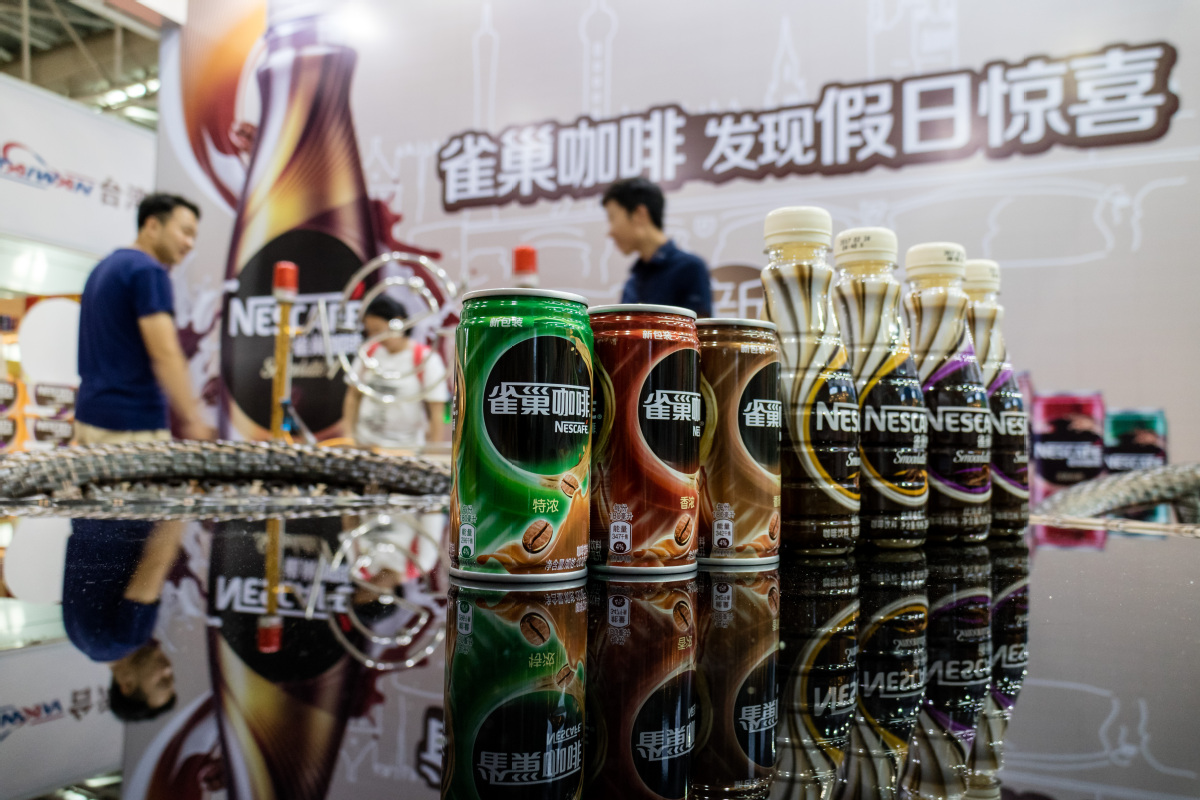
Competition is becoming intense in the ready-to-drink(RTD) coffee segment with a flurry of brands coming up with high-end andlocally-adapted flavors to win more consumers in the Chinese market. Leading the pack is Costa Coffee, a part ofUnited States-based soft drinks giant Coca-Cola Co, which launched aready-to-drink cold-brew coffee earlier this month. The new range, which is available ine-commerce platforms and offline retail outlets across the country, is designedto "restore the quality and taste of cold-brew coffee brewed atbrick-and-mortar stores" despite being in bottles, according to thecompany. Available in cold-brew latte and Americanocoffee flavors, the products come with variants such as low-sugar, low fat,sugar free and fat-free. The brand is now looking to cash in on the growingdemand for healthy food products among urban consumers in China. Costa officials recently said the companydecided to launch the new range after its first batch of RTD coffee products,launched last year, received good market response. The products have beenbrewed keeping in mind the taste preferences of Chinese consumers aged between18 and 35, the company said. Company officials said that being a part ofthe Coca-Cola family has given Costa Coffee a natural access to Coca-Cola'smassive retail distribution channels. Till date, Costa Coffee's RTD productsare available in more than 150,000 retail locations including supermarkets andconvenience stores in the country. "Chinese consumers have highexpectations on innovations in the coffee sector. We believe that localinnovation is a major driving force for the sector's growth," said asenior official of Costa Coffee China, who did not want to be named. Nestleto bring innovations in RTD coffee Local innovation has also been the maindriver for leading coffee brand Nescafe, owned by Swiss food giant Nestle SA,in China. In March, Nestle's Nescafe launched a newRTD coffee product Sakura Souffle SmoovLatte in the Chinese market. Last spring, it launched Sakura Plum LatteRTD and it quickly gained traction with Chinese consumers, said Nestleofficials. This year, Nescafe's new coffee beveragehas been upgraded further in terms of taste innovation, combining the freshnessof sakura with the dessert flavor of soufflé and bringing multi-sensorialtasting experiences. The flower-flavored drinks, tailored forChinese consumers, is one of the first products developed and launched atNestle's product innovation center in Laixi, near Qingdao of Shandong provincein East China. The center has focused on beverages and dairy products and worksclosely with Nestle's three product innovation centers in the US, Switzerlandand Singapore. In recent years, Nescafe has entered a"blowout" innovation stage focused on the Chinese market, aiming tofulfill the individual needs of various consumers with varied tastes andenriching the daily lives of consumers. Since entering the Chinese market in the1980s, the coffee brand has gradually cultivated the habit of drinking coffeeamong Chinese people. Adrian Ho, senior vice-president of thecoffee business unit for Nestle in China, said: "We believe thathigh-quality food and beverages have the power to improve people's quality ofliving and support sustainable lifestyles. "During the pandemic, we havecontinued to provide trustworthy food, beverages and health solutions forpeople all over the world." Innovative measures have also been adoptedfor marketing the new sakura flavored RTD coffee. To provide an upgraded consumer experience,the bottled coffee beverage has cooperated with Tatsuro Kiuchi, a renownedJapanese artist. Besides designing the product appearanceand creating a sakura series of limited edition accessories to creating sakuraseason interior designs featured in subways as well as Lawson and FamilyMartoutlets in Wuhan, capital of Hubei province, where sakura is one of thesignature travel attractions, Tatsuo Kiuchi has made efforts to bring theimmersive atmosphere of spring sakura blossoms to life for consumers, saidNestle. China'sdomestic RTD coffee market to grow rapidly The Chinese coffee market is one of themost innovative markets in the world, according to data from EuromonitorInternational, a leading provider of strategic market research. Coffee consumption is witnessing constantupgrades, while consumer demands for more diversified tastes and derivativeexperiences are becoming new trends, said experts. In recent years, China's domestic RTDcoffee market has continued to grow rapidly. According to data from EuromonitorInternational, the domestic RTD coffee market is expected to exceed 14.9billion yuan ($2.30 billion) this year. In China, per capita coffee consumptionvolumes are far lower than the mature markets in the United States, South Koreaand Japan. In the case of the RTD sector, thepotential is massive. Three trends-black coffee,premium and multiple flavors are driving the rapid growth of RTD coffee in theChinese market, according to Ipsos, a global marketing research institute. "Costa Coffee has strong confidence inthe prospects of Chinese coffee market, in China and the Chinese economy. Inthe next five years, Costa plans to expand its new on-premise coffee stores,cover national markets with RTD coffee retail points and strengthen onlinefamily occasion coffee access," according to the unnamed Costa's official. According to Mintel China's report on theRTD coffee market in the country, which was released last year, despite being apredominantly tea-drinking nation, China's coffee market has seen steady growthover the years. Looking ahead, the RTD coffeesub-category's retail market value is expected to outperform the category withan estimated annual growth of 18.1 percent to reach 11.5 billion yuan by 2023. The entire category, buoyed by expectedgrowth in RTD and fresh coffee, is expected to have an annual growth of 12.3percent and reach 29.2 billion yuan by 2023. Three factors that will likely drive growthin the RTD coffee sub-category are growing interests in coffee consumption,demand for "fast solution" to save time in preparing and consumingcoffee, as well as premiumization of products, according to the Mintel report. Among the leading RTD coffee brands, Nestlecontrols the RTD coffee market in China with a 45.5 percent market share as of2017. In contrast, the next two RTD brands lostground in 2017, with number two Uni-President Coffee ceding 2.3 percent to 12.2percent, while the third placed Suntory lost 1 percent to 10.3 percent. With Nestle's market share close to fourtimes that of its closest competitor, a major shuffle is unlikely in the nextfew years, it said. Annie Yao, account director of MintelChina, said: "Consumers are becoming increasingly concerned about whatgoes into the products they consume, and brands that focus on natural goodnesswithout added sugars will reap the benefits." Yao said the challenges are that newentrants, particularly established brands from other categories, are blurringthe boundaries of the RTD tea and coffee categories. "It's not hard to see how spring andmineral water brands can pose a threat," she said. For example, Nongfu Spring has leveragedits association with premium-quality water sources to enter the tea market withits "Oriental Leaf" products. Other entrants may enter with a functionalangle. For example, snack brand Three Squirrels launched their first beverageproduct Second Brain with medium-chain triglycerides, protein and dietaryfiber, which are said to be good for the brain. The key question is whether the entrance ofother players will increase and stimulate consumption, thereby growing the piefor everyone, said Yao. |