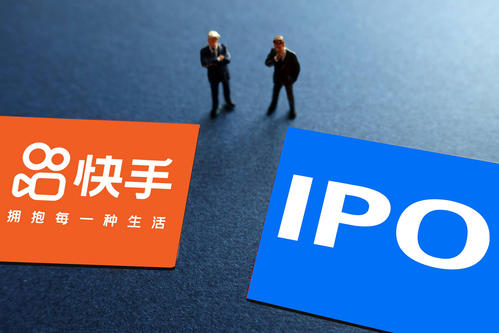
Chinese short video and live-streamingcompany Kuaishou raised about $5.3 billion in a Hong Kong listing on February5, beating its rival TikTok to go public. Shares of Kuaishou started trading onFebruary 5, in Hong Kong, marking the start of its life as a publicly listedcompany. It's the world's biggest tech listing sinceUber's IPO in May 2019, and the largest public offering globally since SaudiAramco's in December 2019, according to data provider Eikon Refinitiv. Kuaishou to raise $5.3b from HK publicoffering Shares closed at 300 Hong Kong dollars($38.70) a piece, marking a 161% jump over the 115 Hong Kong dollars ($14.80)the firm issued them at. It raised a total of 41.28 billion Hong Kong dollars ($5.32 billion) in the offering. If the company exercises an over-allotmentoption, the total raised could hit 47 billion Hong Kong dollars (almost $6.1billion). Kuaishou's valuation soon exceeded 1trillion yuan ($155 billion) after the IPO, taking it past a slew of prominentlisted companies from the internet sector as well as traditional industries,including JD and China Mobile. "It is the ability to introducemachine learning-powered recommendation algorithms that finally created the eraof short videos typically watched on mobile phones. The culture of watchingshort videos is changing the daily lifestyle of almost everyone in theworld," said Zhang Fei, partner of 5Y Capital, one of Kuaishou's angelinvestors. 5Y Capital stuck to the startup, backingKuaishou over a six consecutive fund-raising rounds. The company's listing had been widelyanticipated for months. In a filing this week, it said that the offering hadbeen heavily oversubscribed. "This is an incredible outcome,"said David Chao, co-founder and general partner of DCM, a Silicon Valleyventure capital firm with $4 billion under management. His company was one ofthe earliest investors in Kuaishou, leading one of its first funding rounds backin 2014. DCM still has a 9.2% stake in the socialnetwork, which is worth more than $14 billion at current market value. The firmsaid that would generate a return of roughly 600 times its original investment. By focusing early on the rise oflive-streaming and virtual goods, Chao said the company has tapped in on"a new form of monetization that the US is just starting tounderstand." "The successful IPO of Kuaishou is ofgreat positive significance to the monetization of the entire Chinese shortvideo market. It has gathered the most amount of (online) traffic in thecountry's short video market and has been having a great impact in lower-tiercities," said Jiang Han, senior researcher at market consultancy Pangoal. TikTokrival, China’s second largest short video app Scrolling through short videos, tuning intoa livestream and having the option to buy things online. Outside of China, youmay not have heard of Kuaishou before. But this mobile app has helped millionsmake money, especially those in impoverished counties. Kuaishou prides itselfas an inclusive platform aimed at the everyday man and woman. Founded in 2011, Kuaishou is one of China'sleading social media firms. The Tencent-backed company, whose name means"fast hand" in Chinese, owns an eponymous short-video andlive-streaming app. Its platforms and mini programs have more than 300 milliondaily active users. The company saw its shares soar to HK$338at the open, from an IPO price of HK$115. It was valued at $30 billion afterraising $3 billion from backers in late 2019. Kuaishou has over 19,900 employees, thecompany said in its prospectus. The platform has an average of 305 milliondaily active users in China. Users spend over 86 minutes a day on theKuaishou app on average, according to the company, which started out in 2011 asa platform sharing GIFs, or animated images, and later expanded into shortvideos and livestreaming. Kuaishou's prospectus shows that the onlinevideo site's revenue rose from 8.3 billion yuan ($1.28 billion) in 2017 to 40.7billion yuan ($6.3 billion) in the nine months ended September 2020. Su Hua, co-founder, chairman and CEO ofKuaishou, said the e-platform aims to build "an ecosystem with strongvitality and evolution ability where people and content are connected together". According to Su, the short video platformproduced or distributed 13 billion videos and generated 300 billion yuan ingross merchandise volume so far. More than 20 million people from bothcities and remote areas have also gained income from it by uploading theirself-produced original content. The company also created Zynn, an app thathas surged in popularity abroad, especially in the United States. With Zynn, Kuaishou is trying to dethroneTikTok, the app made by its Beijing-based competitor Bytedance that has becomea worldwide sensation. Unlike ByteDance, which owns TikTok,Kuaishou generates most of its revenue from the live-streaming business, whereusers can buy virtual items and present them as gifts to their favorite hosts. Live-streaming transactions accounted for84% of revenue in 2019, according to a stock exchange filing. Over the past fewyears, Kuaishou has reduced its reliance on live-streaming revenue, withrevenues from online marketing services and e-commerce on the rise. Risksfor Kuaishou Kuaishou’s $5 billion IPO marks another winfor the Hong Kong stock exchange which has managed to attract a number ofhigh-profile Chinese tech listings. Kuaishou is the latest company to make asplash by going public in Hong Kong, which has spent the last year reinventingitself as a hot venue for Chinese tech firms. Since 2019, Alibaba (BABA), NetEase (NTES)and JD.com (JD) have all held secondary listings in the Asian financial hub.The city also made changes last year intended to attract even more companies.Index compiler Hang Seng Indexes, for example, launched a Nasdaq-liketechnology index to track the largest tech firms that trade in the city. Though its listing proves a major win,Kuaishou still faces significant challenges. It's long competed with industryleader ByteDance, which owns the Douyin app — the Chinese version of TikTok. The listing also comes at a time when thetech sector is facing a regulatory clampdown in China. In its prospectus,Kuaishou alluded to that risk, pointing to "the fact that the internetbusiness is highly regulated in China." Kuaishou’s IPO comes at a time when Chineseauthorities are stepping up scrutiny of the technology sector. China’s StateAdministration for Market Regulation released draft anti-monopoly rules lastyear aimed at digital platforms. In November last year, the Chinesegovernment also introduced rules around live-streaming shopping which includeslimits on user spending and restrictions on minors buying items. “Given that the internet business is highly regulated in China,intensified government regulation of the short video, live streaming ande-commerce industries in China could also restrict our ability to maintain orincrease our user base or the user traffic to our platform, which willmaterially and negatively impact our business operations and financialresults,” Kuaishou warned in its IPO prospectus. The company is also a competitor to Douyin,the Chinese version of short video sharing app TikTok, run by internet giantByteDance. Douyin has 600 million daily active users versus Kuaishou’s 262.4million users. Tencent, a major investor in Kuaishou, hasalso launched its own short video feature within its WeChat messaging app.Competition is also ramping up. “The markets in which we operate are highly competitive, and we facesignificant competition from internet companies that operate content-basedsocial platforms, online marketing businesses and e-commerce platforms inChina,” Kuaishou said. “If we fail to compete effectively, our business, financialcondition, results of operations and prospects may be materially and adverselyaffected.” |