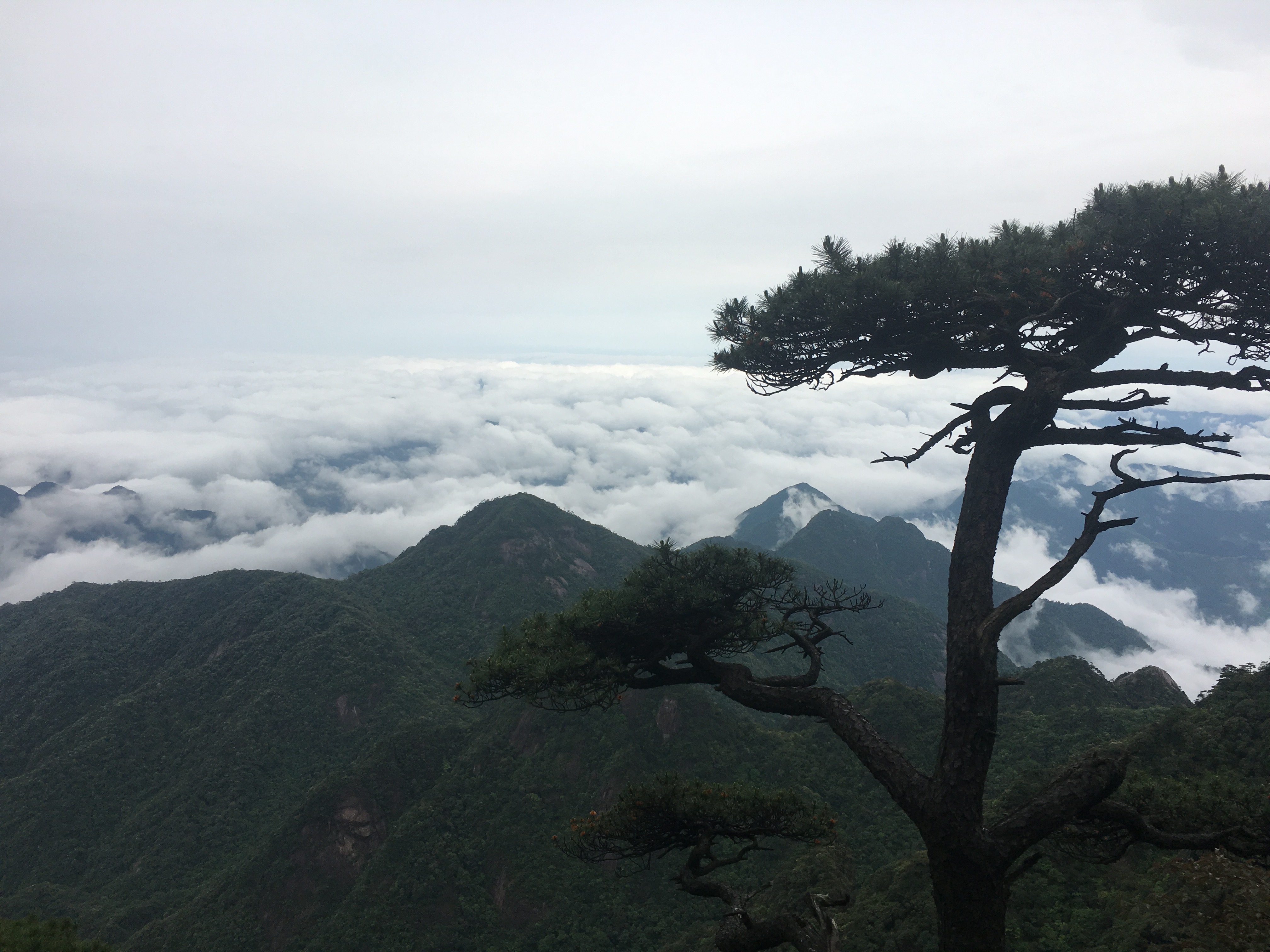
Shangrao City is located in the northeastof Jiangxi Province close to the borders with the provinces of Zhejiang to theeast and Anhui to the north, while Fujian province lies to the south. Thecity's immediate neighbors within Jiangxi are Jiujiang, Nanchang, Fuzhou andYingtan. Shangrao has been known as the land of fish and rice since ancienttimes. Benefiting from flat and fertile lands around the Poyang Lake, Shangraoacts as an important commodity grain, cotton, oil, fish and pig base inJiangxi. It is recommended to take 2 - 3 days to tour around the city as thereare so many things to see: Sanqing Mountain which is a Taoist holy land andfamous for granite peak forest in various shapes in the east; China's largestfreshwater lake Poyang Lake inlaid in the west; Huanggang Mountain, the highestpeak in east China in the south; Wuyuan, which is a must-see place in Shangraoand highlights vast rapeseed flower fields and well-preserved Hui-styletraditional buildings. WuyuanCounty Located in the northeast corner of JiangxiProvince in east China, Wuyuan County is spoken of as some of the mostbeautiful countryside in China boasting multitudes of old trees, caves, ancientbuildings and cultural relics. Jiangling may be well worth seeing in Wuyuan.Vibrant yellow rape flowers spread into the depths of the valleys and somevillages are hemmed in by rape fields. Each spring when the rape is in fullbloom many visitors and numerous photographers are attracted to the area. Undulating hills descend from the highernortheast part to the lower southwest. It is no exaggeration to say that Wuyuanis the most beautiful place in Jiangxi. Having stood for more than 1,000 years,Wuyuan County was first set up in 740 during the Tang Dynasty (618-907). It isan essential part of the ancient Huizhou Culture, with a series of ancientvillages retaining the typical Huizhou residences, mansions of historicalcelebrities, ancestral halls, and antique gallery bridges. Many scholars andtalented people in history leave the country with a deep cultural legacy. The ancient buildings of the Ming and Qingdynasties (1368 - 1912) are all over the countryside, and the rural scenery ispicturesque, especially the rapeseed flowers sea. In March, vast rapeseedflower fields in Hungling Village spread over the mountains. A 300-meter (984feet) high-altitude plank or ropeway brings tourists a different experience offlower viewing. The Hui-style buildings in the Ming and Qing Dynasties werebuilt in line with terrains and distributed in a stepped fan shape, quaint andelegant. While in autumn, the colorful crops exposed on the roofs inject thebuildings with white walls and black tiles into vitality. There are also manyfamous attractions near Wuyuan such as Yellow Mountain, Sanqing Mountain, Mt.Lushan and Mt. Wuyi. Tourists can get to Wuyuan easily by high-speed rail orplane. MountainSanqingshan Mountain Sanqingshan is a famous Taoistresort listed among key scenic and areas of historical interest by the countryat the junction of Yushan County and Dexing City. The mountain contains tenscenic spots embracing natural wonders of steep cliffs, cloud seas, conifersand waterfalls. There are two main tourist routes. There are very many scenicspots along the southern route, while the rugged north route is more suitablefor those who love climbing. Located to the northeast of Shangrao City,Jiangxi Province, Mountain Sanqingshan was inscribed on UNESCO's World HeritageList during the 32nd session of World Heritage on July 6th, 2008. Apart fromthat, it is designated as a national key scenic spot, a grade AAAA nationaltourist area, a national natural heritage and a national geo-park. Mr. Paul,the President of the National Park Foundation of the U.S., remarked that:"Mountain Sanqingshan is one of the few essences and the treasure of theworld". Chinese National Geography recommended it as one of the "topfive beautiful mountains in China" and geologists from China and Americaall agree that it has "the most spectacular granite along the verge ofwestern pacific ocean". Mountain Sanqingshan is 89.48 miles (144km)east of Quzhou City, Zhejiang Province, 48.47 miles (78km) west of ShangraoCity, 62.1 miles (115km) south of Wuyishan City, Fujian Province and 163.42miles (263km) north of Huangshan City, Anhui Province. The scenic spot coversan area of 84.89 square miles (220 square km), of which 27.41 square miles (71square km) is the main scenic area. Yushan County is closest to the mountain. The three peaks Yujing, Yuxu, Yuhua lookslike three divine spirits Yuqing, Shangqing and Taiqing of Taoism resting in arow, hence the name Mountain Sanqingshan. It combines the beauty of HuangshanMountain, the spectacular of E'mei Mountain, the nimbus of Lushan Mountain andthe steepness of Huashan Mountain in one, thereafter displaying a uniquequality. The granite landforms are the most valuedcomponent of Sanqingshan landscape. Mountain Sanqingshan has plentiful granitemorphological landscape resource, picturesque meteorological landscaperesource, ecological landscape resources, rare plant and animal resources aswell as landscape resources of lakes and waterfalls and Taoism culture.Visitors can see the pictographic stone landscape here, lifelike naturalsculptures, such as the Oriental Goddess, Gigantic Boa, Colorful Screen atNinth Heaven, Thousands of Peaks Competing for the Best, Three Dragons Rushingto Sea and Guanyin (Goddess of Mercy) Enjoys Music. Visitors may also enjoyvarious special meteorological phenomena, of which the most important ones are:Cloud Sea, Cloud Waterfall, Sanqing Divine Light, Five Colors Road in theClouds, and Meteor Showers. During winter, you can experience another landscapetype, mountain blanketed in snow. Mountain Sanqingshan has been an importantspiritual center for Taoism, an ancient religious culture unique to China. Thehistoric Taoist stone structures, such as Sanqing Temple, Dragon and TigerPalace and Wind and Storm Pagoda remain important relics of the Taoism culture. Mountain Sanqingshan boasts a particularhigh biodiversity. There are 2,373 species of higher plant, 1,728 species ofwild animals, forming the most diversified ecological environment in East Asia.In addition, 144 species of animal and plant are listed in the China SpeciesRed List, and 79 species are designated as National Key Protection wild animalsand plants in China. It presents a stunning array of naturalbeauty combining primeval landscapes and pristine flora. Few, if any, otherworld sites can rival it in terms of grandeur and majesty of Mother Nature.Come and visit, you will find it a special and beautiful place, not only forChina, but also to the world. WuyuanMuseum Wuyuan Museum is located at Ziyang Town,Wuyuan County, Jiangxi Province. With a total area of more than 59,800 squareyards (50,000 square meters), this museum features strong localcharacteristics. It exhibits more than 10,000 cultural items among which anabundance of pottery, rare porcelains, handicraft works and calligraphy andpaintings from the Ming and Qing Dynasties (1368-1911). Opened to the public in2007, Wuyuan Museum is a perfect reflection of the history and development ofthis area. The rare exhibits of the museum, as essential parts of ancientHuizhou culture, fully embody the deep culture heritage of Wuyuan County. The main building of the museum followstraditional and modern Huizhou architectural style. Covering more than 7,176square yards (6,000 square meters), the exhibition hall contains six main andspecial halls: History of Wuyuan County, Tea and Handicrafts, AbundantPorcelains and Potteries, Rare Inkstone, Calligraphy and Paintings of Ming andQing Dynasties, and Modern Hall. Ceramics are a distinctive feature of thismuseum. From the Tang Dynasty (618-907) to the middle of the Ming Dynasty(1368-1644), Wuyuan area has been firing ceramics for more than 700 years. Inancient times, this area became a major ceramics centre because of itsadvantageous location. Wuyuan County is adjacent to the ‘Ceramic City’Jingdezhen and is situated between the Raozhou and Hangzhou regions. In thosedays, numerous ceramics were transported to royals or markets. Hence, thislocation is ideal for this museum to provide the best conditions to hold rareceramics. There are many rare ceramics that were discovered in ancient tombs,such as celadon bowls, bottles and saucers. All of these ceramics were fired ingovernment kilns in the Song Dynasty (960-1279). Thousands pieces of handicrafts occupy alarge part of the collections. These mainly contain jewels, emeralds, jadewares, woodcarvings, bamboo carvings and bronze vessels. All of these exquisitehandicrafts embody the wisdom and superb skills of ancient Chinese artists. Themost representative handicrafts are an agalmatolite bracelet in the SouthernSong Dynasty (960-1127), a rhinoceros horn cup and ivory carvings in the MingDynasty. These exquisite art works have high artistic and historical value.Around each of them is a mysterious legend. Wuyuan County is the hometown of inkstone.Among the hundreds of inkstone items in this museum, the one named ‘dragon’stail’ is the most famous. From every historical period of ancient China untiltoday, the inkstone-making process has never stopped. The styles differ witheach historical period. First found in 1184 during the Southern Song Dynasty,one inkstone engraved with a pattern of fish scales is the most typical andcharacteristic. This museum keeps more than 1,000 pieces ofcalligraphy and paintings of the Ming and Qing Dynasties, among which are lotsof rare works of famous painters and calligraphers. Wuyuan County has a uniqueart style which uses engraved plates to print pictures. Tourists can see theseinteresting paintings in the museum and get a better understanding of thehistory of ancient Huizhou. |