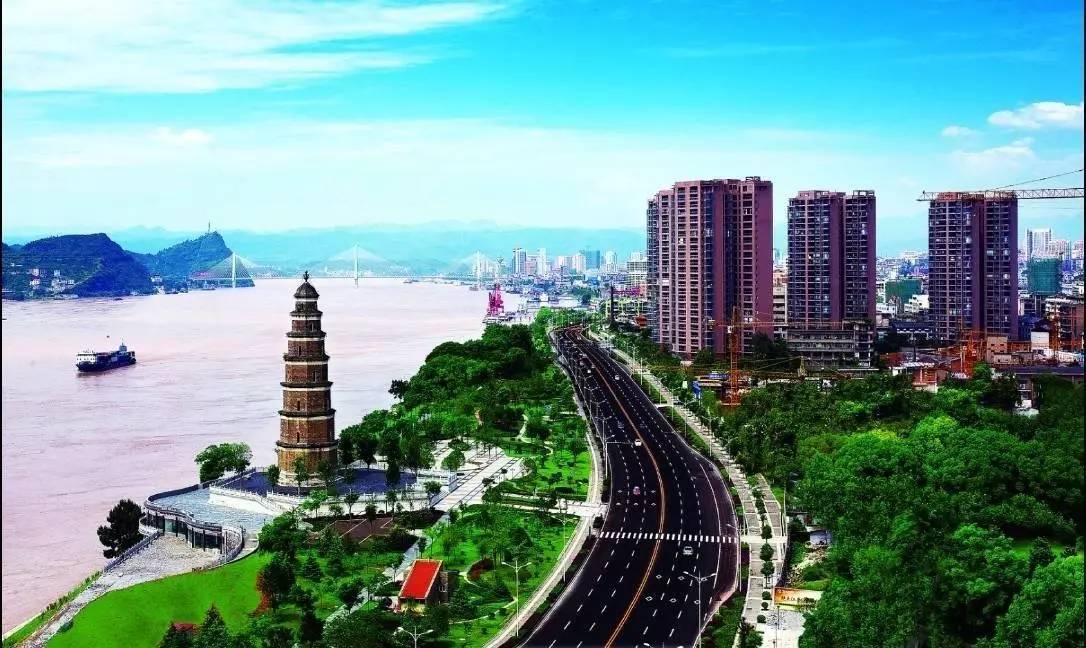
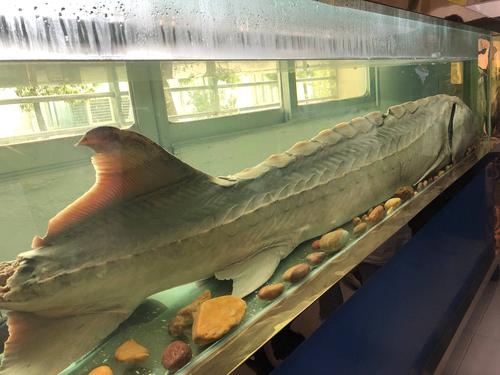
Yichang is a city with a god-givengeographic location and natural resources. Here you will find grand mountains,historical relics, and water conservancy projects, fused by modernarchitecture, making an ideal place for holidays and leisure. When travelinghere, you will be dazzled by the numerous attractions in and around Yichang. Yichang city is located in the southwest ofHubei Province and lies on the northern bank of the Yangtze River. It bordersJingzhou and Jingmen to the east, Hunan Province to the south, Enshi to thewest and Shennongjia Nature Reserve and Xiangyang to the north. Yichang is thelocation of the Gezhouba Water Conservancy Project and Three Gorges DamProject, so it is known as the world’s hydropower capital. Every year, a largenumber of tourists come to visit this great water conservancy miracle. Some ofthem would like to take a 3-4 days Yangtze River cruise to appreciate the ThreeGorges Dam and picturesque scenery along the Yangtze River. Another interestingaspect of Yichang is that several Chinese eminent persons were born here inancient times, such as the concubine Wang Zhaojun during the Western HanDynasty (206 BC - 24 AD) and the patriotic poet Qu Yuan in the Warring StatesPeriod (476 BC - 221 BC). Many historical sites are kept in this city. ThreeGorges Dam Project "Three Gorges Dam Project" is theshort term for the water control project on Yangtze River. It is located in themiddle section of Xiling Gorge near Sandouping Town in Yichang City, HubeiProvince. Being the world's largest hydropower project, this dam has createdmany "Firsts" such as the most efficient dam in flood control, themost difficult construction work and the largest migration project in theworld. The dam project is composed of the dam, thehydropower stations and the navigation facility. It measures 607 feet tall andthe top is 3,319 yards wide. It has taken 17 years to finish the constructionof the whole project, which started in 1992 and includes three stages. The first stage took five years from 1992to 1997. During this period, the cofferdam construction and the excavation of adiversion channel in the first stage were finished. Meanwhile, a temporary shiplock on the left bank of the river and some preparation work was alsocompleted. The second stage lasted six years from 1998 to 2003, when thecofferdam construction was in its second stage and was undertaken at the sametime as the construction of the permanent ship lock and the navigationbuildings. The power station facilities construction and the installation ofmachinery on the left bank were also completed. The third stage of the projectbegan in 2003 and has been completed in 2009. During this period, theinstallation of all machinery, the construction of the power station and the damon the right bank are finished. Now, a 3,861 square miles canyon-reservoir damis presented to the world. The landscape along the Three Gorges islike a traditional Chinese picture, and the precious cultural relics rangingfrom the Paleolithic Age to the modern times add a human touch to the area. Itis always a hot spot on travelers' itinerary. But as the water rising, manyscenery and historical sites were or will be flooded (by the change of thewater level).The relevant cultural relic department and local government aredoing their best to save these valuable cultural treasures. The protectionmethods such as removal and reproduction are adopted. Moreover, the risingwater also increases the scenic area, making some impenetrable streams andscenic sights easy to reach. In a word, the dam project has ruined much naturalbeauty but at the same time creates new ones. So visitors should explore more,not just to feel pity of it. Opened in 1997, the Dam Scenic Area ismainly composed of Tanzi Mountain, 185 Platform, Dam Viewing Point and MemorialGarden. It fully displays to visitors the culture of the water conservancyproject. Climbing on the Viewing Platform, visitors will have a panoramic viewof the whole dam. 185 Platform got the name from its height – 185 meters,equivalent to the height of the dam crest. Standing on the Dam Viewing Point,visitors will see the huge dam body at close range. The Memorial Garden is alarge open air museum where exhibits a large number of machines that have beenused in the dam construction, such as mechanical excavators and cranes.Besides, visitors can also go to Huangling Temple, the largest ancient buildingin the Three Gorges area. QuYuan’s Hometown Qu Yuan was a patriotic poet in the WarringStates Period (476 B.C.-221 B.C.). When building the Three Gorges Dam, manyhistorical sites related to him were moved to a higher place and a culturaltourism zone was established, namely Qu Yuan's Hometown. Covering an area of 82acres, it is located in Zigui County, Yichang City of Hubei Province, about 660yards (600 meters) from the Three Gorges Dam. You can fully and clearly viewthe giant project from Qu Yuan’s Hometown Scenic Area. Qu Yuan was also a great and belovedpolitician, ideologist, diplomat and a reformer in ancient China. Determined tobe of great service to his country, the politician advocated reform and putforward many feasible policies. However, as his proposals placed othernobilities into an unfavorable position, they impeached him and convinced the kingto fire him. Unwilling to see his country being occupied and conquered byanother country, Qu Yuan drowned himself. In his memory, people set the day hedied as the Dragon Boat Festival. The major scenic spots inside the scenicarea include Qu Yuan’s Temple and local folk houses in the traditional style.Qu Yuan’s Temple is composed of a memorial archway, a bronze statue of Qu Yuan,Qu Yuan’s Tomb, a display house, and a corridor. Entering the temple throughthe memorial archway, you will see a big statue of Qu Yuan where people canworship. Qu Yuan’s Tomb, which is actually a cenotaph, occupies 145 squareyards (120 square meters). In front of the tomb, there are two big stone lionsfrom the Ming Dynasty (1368-1644). If you look inside the tomb gate, you cansee a passageway and the coffin that hangs above a giant lotus-shaped stonebase. The display house exhibits Qu’s portraits, works and historical relicsdiscovered in Zigui County. Qu Yuan’s poems and later generations’ praises arecarved into the corridor’s walls. In the scenic area, you can also see localantique style folk houses. They are built with classical rafters and grey-greenbricks. Today, these buildings are used to exhibit local customs and culture.They include the House of the Dragon Boat Festival, the House of the DragonBoat and the House of Local Customs, etc. By visiting these houses, you canlearn more about this land and experience the local people’s deep love andrespect for the great patriotic poet. The best time for a visit is around theDragon Boat Festival. During the festival, one can experience traditionalcustoms and take part in interesting activities, including making zongzi,participating in the dragon boat race, wearing a perfume pouch, and tyingfive-colored thread. Chinese Sturgeon Museum is a part of theChinese Sturgeon Garden which is located in Xiaoxita Town, in Yichang of HubeiProvince. The museum was set up in 1993 by the Chinese Sturgeon ResearchInstitute. This institute aims to preserve the rare species of Chinese sturgeonthat includes 27 species of them that still exist in the world. Chinese sturgeon, also known as GreenSturgeon, is a kind of migration fish, having lived on the earth for 140million years. It is one of the oldest vertebrate lying between chondrichthianand bony fish. In this case, Chinese sturgeon are called the 'living fossil'.As the king of the freshwater fish, it is the largest and lives the longest. Anadult sturgeon can be more than 4 meters (about 13 feet) long and weigh inexcess of 500 kilograms (about 1,102 pound). A mature Chinese sturgeon, over 14years old for the female sturgeon, can lay about 0.3 million to 1.3 millioneggs at one time; unfortunately, more than 90% of these eggs will become thedinner of other fish, such as the bronze gudgeon and the yellow cartfish.Therefore, the considerable reduction of the number of this specie makes it ahighly prized variety of Chinese sturgeon. In China, the sturgeon is mainlydistributed over the trunk stream of the Yangtze River. Every year, from summerto autumn, a school of Chinese sturgeon, migrating to the upper reaches ofYangtze River from the shallow sea area out of the Yangtze River estuary, willlay eggs in their hometown. However, since the building of the famous Gezhouba WaterConservancy Project in the 1980's, their migration route has been obstructed bythe dam. As a result, they have lost their spawning area for reproducingoffspring which has also put the survival of Chinese sturgeon at risk. In 1982the Chinese government set up a major institution to protect the precious rarespecies, and to research the reproduction of the rare Chinese sturgeon in orderto preserve them. From 1984, 4.44 million young Chinese sturgeon have been putinto the Yangtze River. Since 1988 in order to provide the species with evengreater protection, the Chinese sturgeon has been upgraded and has received astate-protected animal classification. During your trip to the Chinese SturgeonMuseum, you will have the opportunity to enjoy seeing not only Chinese sturgeonbut also Russia sturgeon, American Paddlefish, Amur sturgeon, Hybrid sturgeonand many more. What is more, you will also have the chance to see the Chinesealligator, also called Yangtze alligator, in the Alligator Museum, along withgiant salamander and mullet.
|