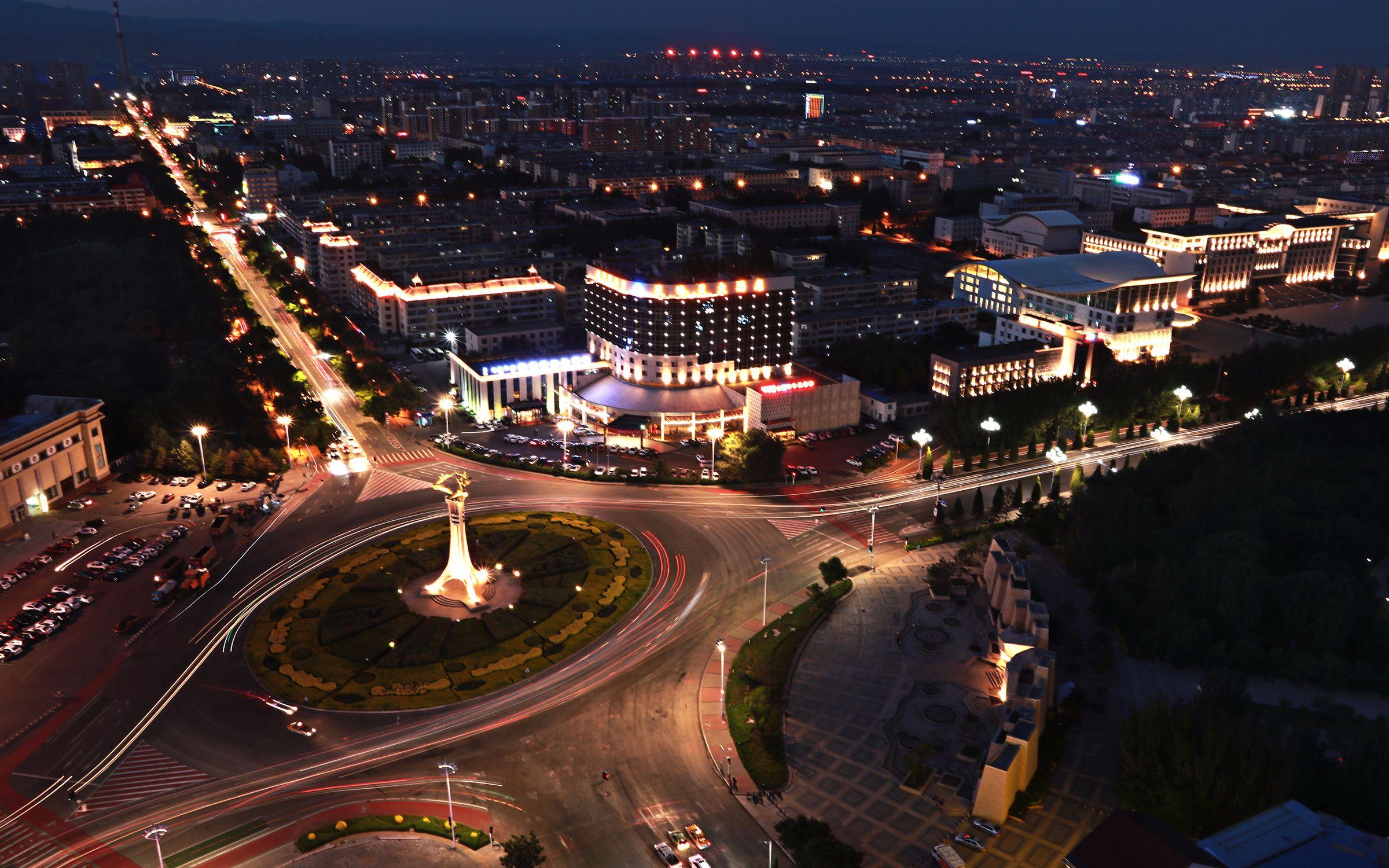
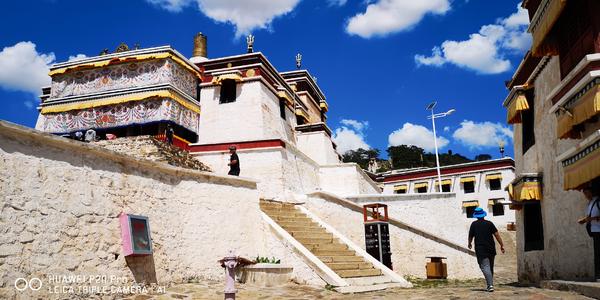
Baotou is the largest industrial city inInner Mongolia Autonomous Region, rich in mineral resources. It is the iron andsteel base for China, and the coal deposits make up about a quarter of China'sreserve. The total area of Baotou covers 27,691 square kilometers, 160.6 squarekilometers of which is urbanized. It is the largest industrial city in InnerMongolia Autonomous Region, and it lies in the "Golden Triangle" ofthe Hetao Plain. Baotou is rich in mineral resources. It is the iron and steelbase for China, and the coal deposits make up about a quarter of China'sreserve. It's an important industrial base for metallurgy, machinerymanufacturing, rare earth, chemicals, non-ferrous metals, textiles, electronicsand energy. The area is conveniently connected by rail with Beijing, Lanzhou,the Republic of Mongolia, and Russia. Mongols People-major nationality in Botou ,Baotou Travel GuideThirty-seven different nationalities live in Baotou.Mongols, Han, Man, Hui, Dawuer and Ewenke can be found here. The population is2,011,000, and 1,300,000 of them are city dwellers. Developed as a small commercial center inthe 1880s, Baotou began to grow as a manufacturing hub while it was part of theJapanese-controlled state of Meng-chiang (1937-1945). It was returned toChinese control in 1945 and became a center of heavy industry in the 1950s. Thecity was established in the Qing Dynasty (1644-1911 AD) on a Neolithic site,and is located just to the north of the Yellow River and the Gobi Desert. Thecity became the largest in the province after the Communists came to power in1950. Genghis Khan's Mausoleum Genghis Khan, "Khan of Khans",was the great leader of Mongolians. At the end of 12th century, he unitedMongolian tribes and challenged other powers to expand his huge Mongolianempire, which extended from South China to the Caspian Sea. In 1277, Khanattacked the West Xia Kingdom (presently Ningxia) and encountered strongresistance. He died of disease and age. The great emperor was later buriedsecretly according to Mongolian custom. It says that after the burial 2,000 menwere slaughtered by some 800 soldiers who were in turn executed so that thelocation of the real tomb remains a secret. Genghis Khan's Mausoleum, rebuilt in 1954,185 kilometers south of Baotou, is a mausoleum, in which only his clothing isburied in memory of the great leader. The 5.5 hectares mausoleum includes threegiant yurt halls which house coffins of the Khan, his wife, his son and hisgenerals. There are four sacrifice ceremonies held annually to commemorate thegreat hero and leader of the Mongolian people. The ceremony, held on March 21ston lunar calendar, is the grandest. After the ceremony, horse racing, archeryand wrestling are held as entertainment. Memorial Hall of Genghis Khan's Mausoleum,Baotou Travel GuideThe total area of the Mausoleum is over 50, 000 sq. m.There's a spacious square at the front of the main hall. Two masts are set upon the square and the pattern of nine steeds was embroidered on the banner. Itis said that that the patter is a symbol off flourishing and happiness. The hall is 26 meters in height and has afloor area of over 1500 square meters. There are two Mongolian tent-shaped topsof different sizes on the hall. Blue and yellow glazed tiles are laid on thehall, forming a traditional wave-shaped pattern. Upturned eaves, vermeil gate,and white marble mortar-engraved guard rail in front of the hall, stablegranite base make the hall even more awful and solemn. The hall is composed of the front hall,rear hall, east and west halls and east and west corridors. The 5-meter-highGenghis Khan statue is worshipped in the front hall, three yellow silkMongolian tents are in the front face of the rear hall, and the coffin ofGenghis Khan and his three wives is laid inside. The coffin of Genghis Khan'sfourth son Tuolei and his wife are laid in the east hall, the battle sword,saddle and sacrificial milk bucket are worshipped in the west hall. Genghis Khan's Mausoleum has now beenexpanded to an area of 80 sq. km. There are such scenic spots as CentralSquare, Iron Horse and Golden Curtain, Euro-Asian Square, Mongolian Historicaland Cultural Museum, Temporary Dwelling Palace of the Han Dynasty. Wudangzhao Lamasery Located about 70km to the northeast ofBaotou, the 250-year-old Wudangzhao Lamasery is the largest of its kind inwestern Inner Mongolia. The style of Buddhism that is practiced here, of theYellow Hat Sect (Gelukpa), has a strong following in Mongolia, ever since theMongols invaded Tibet in the thirteenth century, and nowadays this area stillattracts pilgrims in a multitude. The Lamasery is named Wudangzhao, literallyWillow Lamasery in Mongolian, because the area around the temple has long beencovered by these wispy trees. The original name of Wudang temple isBadager temple. The word of Badager in Tibetan language means white lotus. TheWudangzhao Lamasery is the largest well-preserved Tibetan-style construction inInner Mongolia. The Lamasery itself is of traditional, pretty Tibetanarchitecture, with white walls and flattened roofs. At the beginning, theLamasery had over 1,200 resident monks. The complex was built in 1749, andcovers a total area of approximately 50 acres. It has been home to a number of"Living Buddha", seven of whose ashes have been deposited in one ofthe main halls. In total the place has six main halls including a largecollection of Buddhist art in the lamasery, ranging from ancient sculptures tomurals of gold, silver, copper, wood and even soil. Meidai Lamasery Meidai Lamasery, lying in Tumd Right Bannerat the southern foot of Daqing Mountain, was built by Longqing Emperor Altankhan, chief of Tumd Mongolian Tribe of the Ming Dynasty. The Lamasery is, infact, the combination of a town and a temple. It is some 50 km away from BaotouCity. In the region of Longqing, Altan khan accepted the bestowed title of"Prince of Shunyi," he built the town and the temple. In 1575, thefirst town and temple was completed, and the royal court bestowed name ofFu'hua. In 1606, the missionary named Maidalihutukertu came to do missionarywork here, so it is also called Maidali temple with a circumference of 681meters, and has an area of 400,000 sq. meters. Clay combined with stones formsthe wall of the city, the total length of which is 681 meters, forms arectangle shape. There had been a sandalwood pagoda, it was said the ash of theAltan Khan's gracious Sanniangzi was kept there. At the four corners of thewalls are built the mounds extending out 11 meters, with a watchtower standingon each of them. The layout of Meidai Lamasery serves for three purposes:prince's palace, temple for enshrining and worshiping Buddha, and castle. Thisis of great value to the study of the Mongolian history and architecture of theMing Dynasty. It is the only city site of the Darning JinState that could be found through historical records and real evidence. Thiswas also the place where Alatan introduced the Tibetan Buddhism into InnerMongolia. The Meidai Lamasery is a symbol of the unity of various nationalitiesand a key historical relic protected by the state. Resonant Sand Gorge The Baotou Resonant Sand Gorge, located50km south of the city proper, is more a place of natural beauty than ofhistorical importance. The Gorge is a part of the vast Gobi desert that startsjust to the south of Baotou and that spreads over Inner Mongolia, Gansu,Qinghai, Ningxia and Xinjiang provinces. The sand gorge is a not easilyaccessible area of numerous sand dunes that rise up to levels of over 90meters. It receives its name from the echoing Shhhh that the sand makes as youstep on its surface. Visitors here can try camel rides, can parasail, can slidethe dunes or simply build sand castles. |