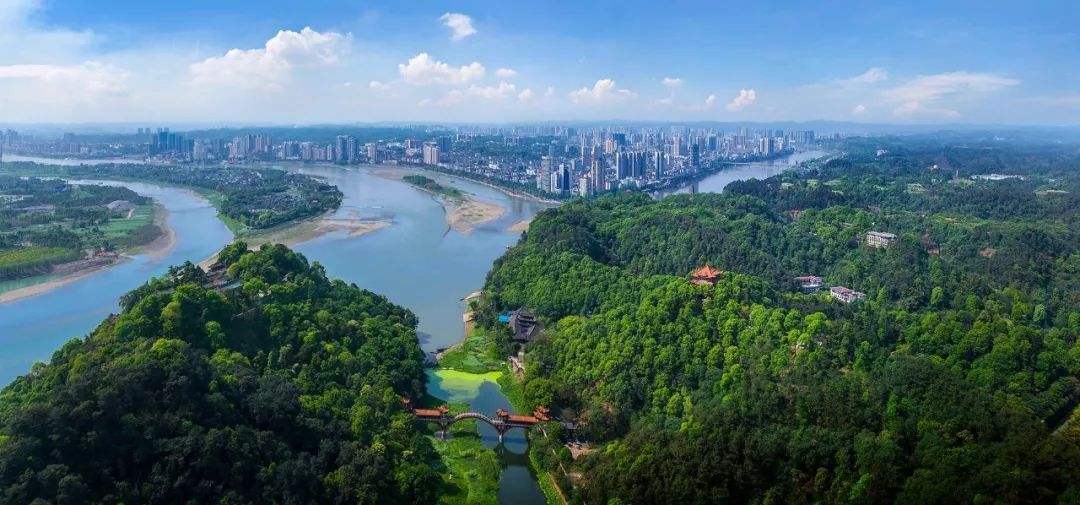
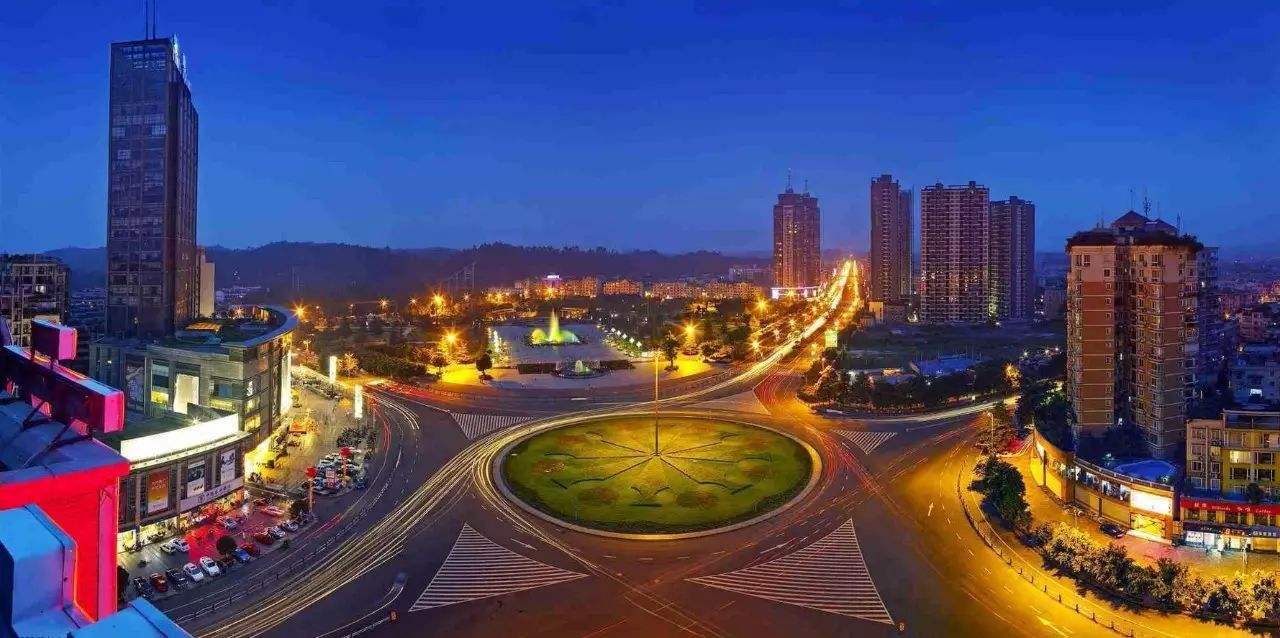
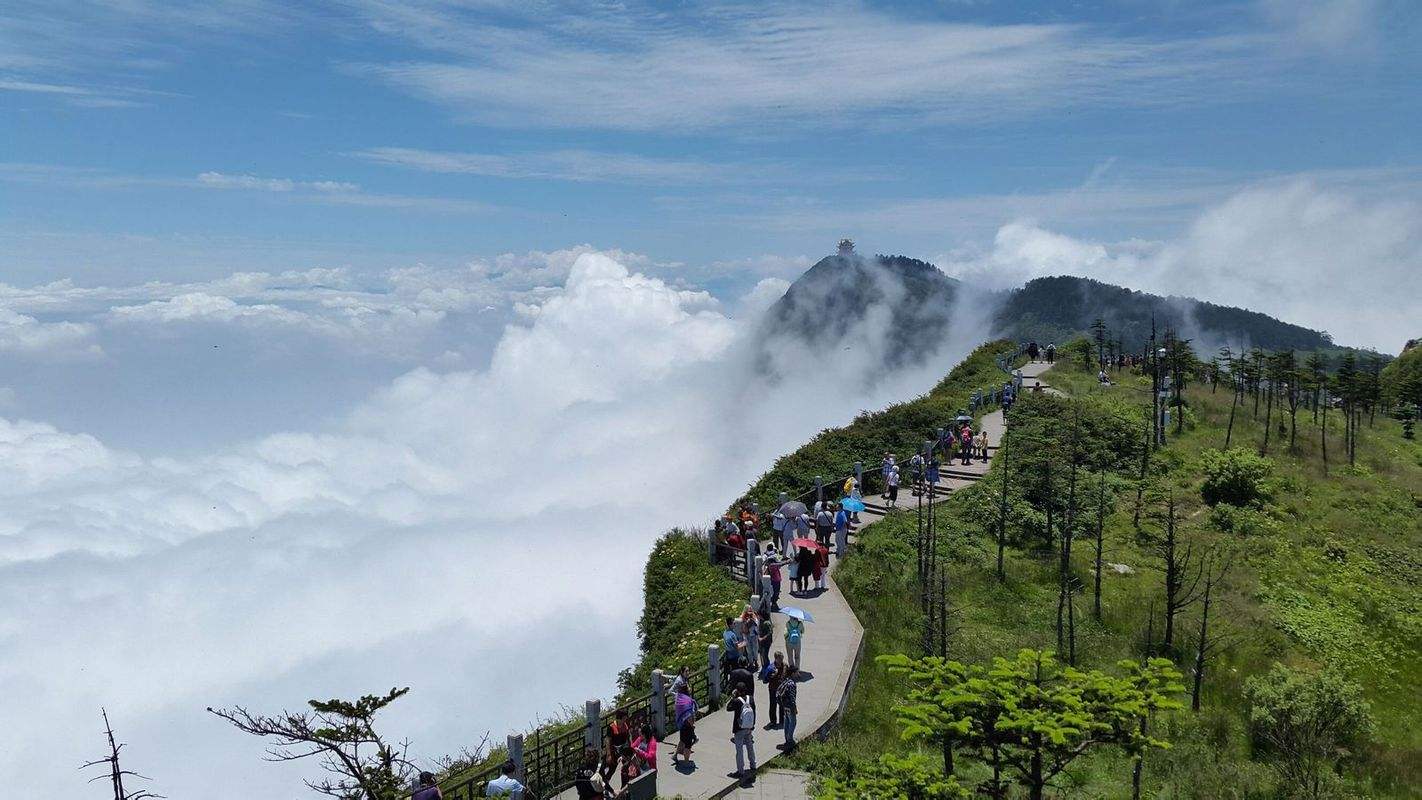
Leshan is located in the southwest ofSichuan Province, about 180km from Chengdu and 20km to Mount E'mei. It covers20 thousand square kilometers and has a population of 6.59 million. Leshan is acultural city with a history of more than 3000 years and a modern city as well.Because of its rapid development most of the old buildings have been torn downbut fortunately the Giant Buddha remains intact. It attracts millions ofvisitors from home and abroad. Leshan is rich in forest and water energyresources. Mineral deposits include rock salt, bittern, limestone, andsaltpeter. Leshan is one of the major producers ofsalt and a large hydropower base in the southwest of China. The Gongzuihydropower station on the Dadu River is a regional power grid. The chieffarming products include rice, grapes, oranges, tea, silkworm cocoons, andpigs. Transportation to Leshan City is very convenient. The Chengdu-KunmingRailway runs through Leshan. Ferries sail from Leshan to Yibin on the MinRiver. Leshan has many scenic and historical spots such as the Mount E'mei andLeshan Giant Buddha, the small Three Gorges of the Min River, the Black DragonPond, and the Sansu Clan Hall. Many of historical relics have been added to theWorld Natural and Cultural Heritage List. MountE’mei Mt. Emei in Sichuan Province in SouthwestChina is one of the most well-known summer destinations in China thanks to itspleasant weather, congenial atmosphere, the inspiring natural scenery and theinfluence of the Buddhist culture. The mountain is characterized by loftyancient trees, impressive waterfalls, pristine brooks and numerous Buddhisttemples. Mt. Emei is noted for considerable weatherdifference between various spots on the mountain. A 14 centigrade degreedifference in temperature has been reported between the foot of mountain andits peak. It's not uncommon for it to be blistering at the foot of the mountainand cool and pleasant higher up the mountain. The average temperature duringJuly and August, the hottest period in China, is around 11.8 degreecentigrade. Mt. Emei is a natural "OxygenBar", where the average Negative Oxygen Ions in one cubic meter reach 0.1million to 1 million which is 500-1000 times more than that in its citycousins. Scientists have confirmed that adequate negative oxygen ions (10.000or above in one cubic meter air) in air can motivate the metabolization of thehuman body to repel exhaustion, improve sleep, and prolong life. The Baoguo Temple at the foot of the Mt.Emei is the largest temple on the Mt. Emei and the starting point for taking atour of the Mt. Emei. The temple was built during the years of Wanli period inthe Ming Dynasty. The horizontal tablet of "Baoguo Temple" waswritten by Emperor Kangxi of the Qing Dynasty. It is the place where the Mt. EmeiBuddhist Society is located. The whole temple is a typical courtyardhouse covering an area of more than 10 acres. Each courtyard has one view andthe scenery changes as you go deeper and deeper, which is rather a spectacularscene. The main hall of the temple built along the mountain has four layerswith one layer higher than another, which presents a grand and naturalappearance. The number of the Buddhist temples dottingthe mountain is quite inspiring but the views from the Golden Summit at anelevation of 3,077 meters above sea level steals the glory. The Gold Summit isan extravagance of natural wonders and Buddhism spiritualism, which comprise offour marvelous spectacles of Sunrise, Cloud Sea, Buddhist Light and sacredlamp. The scenery of a red glowing sun dancing over the sea of clouds in theeast is fabulous. A few lucky visitors will encounter the Buddhist Light whichonly occurs 14 times a year. On these occasions, your shadow is cast before youin the mist and a colorfully glowing lights circle you as if you are attained enlightenment. Wanian Temple is one of the eight largesttemples on the Mountain. The Brick Hall of the Wannian Temple is a wonder ofancient buildings. During the past four hundred years, it has gone throughseveral earthquakes of magnitude 5 to 7.9 but it is still standing to this day.Hence, it is reputed as a miracle in the history of ancient architecture inChina. A highlight of the temple is a bronze statue of Puxian riding anelephant, which was cast in Chengdu by a Buddhist monk named Maozhen under animperial order during the Song Dynasty. The bronze statue has a symmetricalproportion with superior casting craftwork. It is 7.85 meters high and weighs62 tons. What How such a huge objective was transported and placed on themountain remains a mystery. LeshanGiant Buddha The Leshan Giant Buddha is a huge statuecarved into the side of Lingyun Mountain. Taller by 17 meters than the standingBuddha in Afghanistan, the Leshan Giant Buddha is the tallest and largestBuddha in the world. There is a local saying: "The mountain is a Buddhaand the Buddha is a mountain". It was included by UNESCO on the list ofWorld Heritage sites. The statue depicts a seated Maitreya Buddhawith his hands resting on his knees and a smile on his face. The Leshan GiantBuddha is about 71 meters high and 24 meters wide. The head is 14.7 meters longand 10 meters wide with 1,021 buns of hair on it. His smallest toenail canaccommodate a seated person. Each ear is 7 meters long and his nose is 5.6meters long. Each eyebrow is 5.5 meters long. The instep, which is 8.5 meterswide, can accommodate 100 people. The toe is large enough to accommodate adining table. There are two ways to visit the LeshanGiant Buddha: on foot and by boat. If you want to get a close-up view of the Buddha,you can choose the walking route. You will walk along the plank pathways toenjoy the changing view from various angles of the Buddha, from its head to itsfoot. The plank pathways are steep and narrow. Ifit is not convenient for you to walk, we don’t recommend choosing this option.Alternatively, you can visit the Leshan Giant Buddha on a sightseeing boat.This will let you view the Buddha from a distance and get a panoramic view ofit. Taking a boat trip is a better choice fortourists who are not good at climbing. It is also highly recommended in thepeak tourist season (July–October) to avoid the crowds. You can also combinethese two options so you can not only get a close-up view but also see itsspectacular panorama. Behind the Leshan Giant Buddha, a sleepingBuddha with a body length of more than 4,000 meters “floats” peacefully on thewater. The head, body, and foot of the Buddha are composed of Wuyou Mountain,Lingyun Mountain, and Guicheng Mountain. The best way to observe the sleeping Buddhais taking a trip on a sightseeing boat. FairyPool Scenic Area Fairy Pool is a renowned attraction inJiuzhaigou. It is situated in Dalu town, about 45 kilometers (28 miles) fromGanhaizi Lake. In Tibetan, the Fairy Pool Scenic Area is called Nen'en Sangcuo,meaning "a place where fairies bathe." Rare animals often appear around FairyPool. The virgin forest here is an ideal living environment for pandas, goldenmonkeys, and Tibetan antelopes. The Fairy Pool Scenic Area comprises about2,000 alpine lakes and travertine pools. The area is celebrated for their threehuge colorful pools and a group of small white and pale yellow stone dams.Pools of various shapes and sizes are scattered throughout the lush forest. The most celebrated natural attractions arethe Golden and Silver Beach, the Double-Dragon Pool, the Divine Frog Sea, theBlue Dragon Sea, the Kermes Brook and the limestone waterfalls. In addition tothe pools, the area has the best preserved virgin forest and the greatestdensity of arrow bamboo in Sichuan Province. Many rare animals such as pandas,Tibetan antelopes, and golden monkeys roam the forest. The Fairy Pools are celebrated for thethree huge colorful pools and a group of small stone dams. The colors of thedams are white and pale yellow. The calcified stones in the water resembleagates, coral, and pearls. The three pools are known as the Big Lake, the GreenSea, and the Big Sea, each covering an area of about 6,667 square meters (twoacres). The Rippling Golden Stream features stone dams, colorful pools, travertinestreams, and waterfalls. Tianbao Museum can be found in this scenicarea. Another historical and cultural attraction is the Horse’s Passage, whereSongtsen Gampo (617–650) founder of the Kingdom of Tibet in ancient China --and his troops once passed. Some inns and tents have been built in the willowforests along this historic path for use by tourists. Activities includinghorse races, barbecues, bonfires, and folk performances given by Tibetanartists are held here. In Tianbao Museum, tourists can see the locallumbermen's cottages and tools. Visitors can plant or adopt trees to contributeto the environmental protection of this scenic area. |